
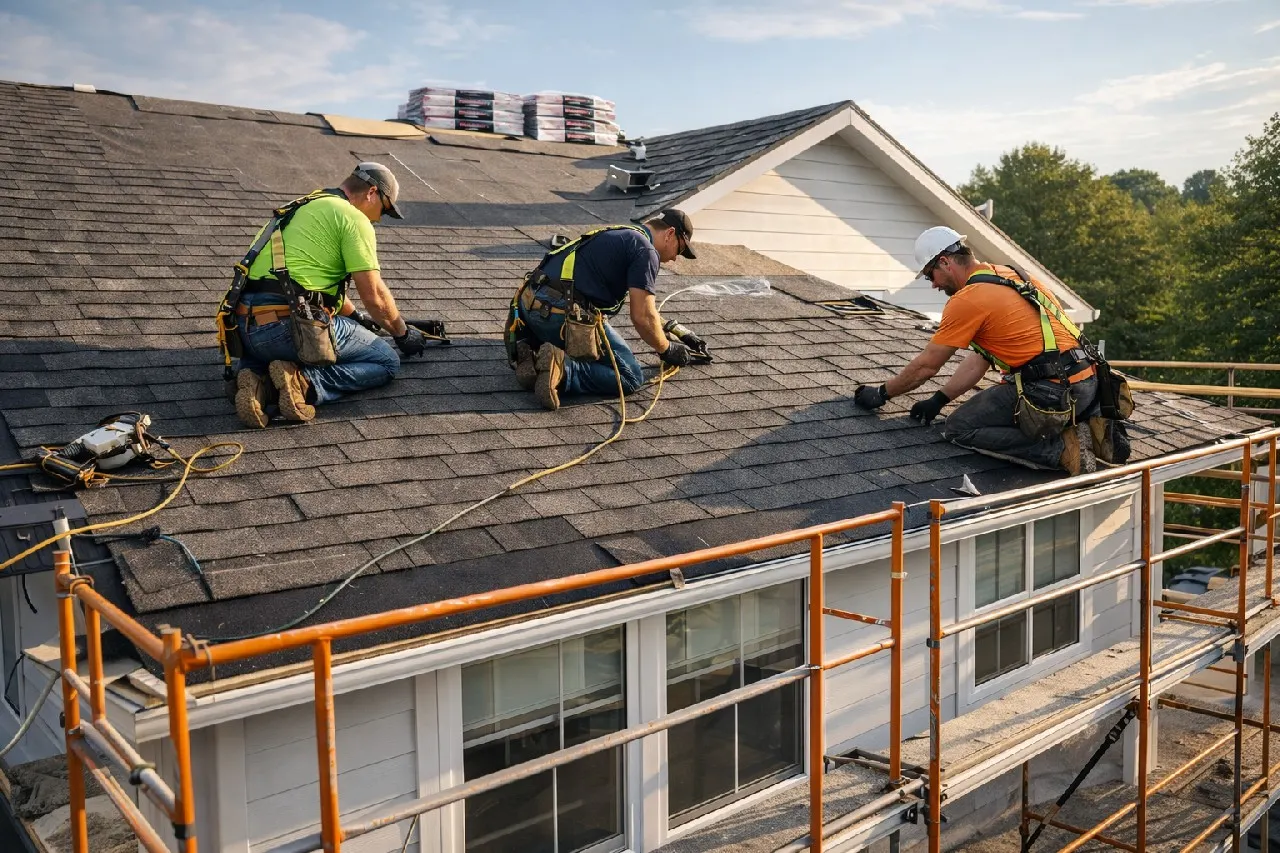


⚡ TL;DR: This guide helps Syracuse homeowners master asphalt shingle roof installation by addressing local climate challenges, proper ventilation techniques, and essential contractor vetting to prevent expensive long-term repair costs.
📋 What You’ll Learn
Installing an asphalt roof in Syracuse requires specialized knowledge to withstand our brutal winters and high winds. This guide helps you navigate local installation standards to ensure your roof lasts decades.
- Master Syracuse-specific installation techniques by understanding why standard roofing methods fail under our heavy lake-effect snow loads and the constant pressure of freezing and thawing cycles.
- Prevent common structural water damage by learning the critical importance of proper ice shield placement, flashing installation, and attic ventilation to stop ice dams from destroying shingles.
- Identify professional nailing patterns so you can ensure your roof withstands our notorious Central New York wind gusts, preventing premature shingle loss and costly emergency leak repairs.
- Vet local roofing contractors effectively by using our checklist of high-impact questions designed to expose corner-cutting habits and ensure you hire a team that prioritizes quality over speed.
📖 Reading time: 8 min
✍️ Author expertise: Syracuse-based roofing contractor with two decades of field experience repairing local storm damage.
A single mistake during your roof installation can turn your biggest asset into a leaking, money-pit nightmare before the first Syracuse winter hits. Most homeowners assume that as long as the shingles look straight, the job is done right, but that is exactly how thousands of dollars disappear down the drain.
You might be surprised to learn that local weather patterns make specific installation techniques mandatory, not optional. Failing to account for our heavy snow loads or high wind zones is a gamble that almost always ends in a premature roof failure.
I have seen countless properties suffer from improper nailing, bad ventilation, or corner-cutting tactics that leave you holding the bill. If you want to ensure your investment actually protects your home for the next twenty years, you need to know exactly which common blunders to watch out for.
Read on to discover the critical installation mistakes that Syracuse roofing contractors hope you never find out about.
The Syracuse Climate Challenge: Why Standard Installation Fails in Central New York
Syracuse isn't just a place where it snows; it is one of the most punishing environments for residential roofing in the United States. When you follow standard manufacturer guidelines without adjusting for our local lake-effect snow and drastic temperature swings, your roof is fighting a losing battle from day one.
Most big-box contractors use a one-size-fits-all approach that ignores the physics of our region. They treat your home like it’s located in a mild climate, leading to brittle shingles and compromised structural integrity before the warranty period is even halfway done.
Here is why standard installation methods routinely fail when exposed to the CNY winter:
- Thermal Shock: Rapid shifts between freezing nights and sunny afternoons cause materials to expand and contract violently. Standard adhesive strips often fail to seal correctly under these conditions.
- Extreme Snow Loads: The weight of heavy, wet snow creates immense downward pressure. If the roof deck isn't reinforced properly, you will see sagging or cracked rafters within a few seasons.
- Ice Dam Formation: Poorly managed heat loss from your attic turns the edges of your roof into a glacier, forcing water underneath your shingles.
If you don't account for these specific Syracuse realities, you are effectively paying for a roof that is guaranteed to leak. You need a system that breathes, sheds ice, and stands firm against high-velocity winds that scream across the lake.
Improper Nailing Patterns: The Hidden Cause of Wind Uplift and Shingle Loss
Most homeowners never climb onto their roof to check the nail line, and contractors count on that lack of oversight. If a roofer uses a nail gun with too much pressure or misses the manufacturer-specified target zone, your roof is essentially a house of cards waiting for the next lake-effect gust.
When shingles are nailed too high, too low, or at an angle, the nail fails to penetrate the double-layer strip. This creates a weak bond that turns your roof into a collection of loose shingles rather than a unified, weather-resistant shield.
Here is what happens when those nails miss the mark:
- High Nailing: The nail misses the bond strip, leaving the shingle loose and vulnerable to being torn off by winter gusts.
- Under-driven Nails: A protruding head punctures the shingle above it, creating a direct path for melted snow and ice to enter your decking.
- Over-driven Nails: The gun drives the nail head right through the material, meaning the shingle has zero holding power against the elements.
In Syracuse, where high winds are a standard part of the season, precision is non-negotiable. You are not just paying for shingles; you are paying for the mechanical grip that keeps them attached to your home.
If your contractor is rushing the job to get to the next site, they are likely skipping the required six-nail pattern. Don't let them tell you that four nails are good enough. In this climate, cutting corners on fasteners is the fastest way to turn a new roof into a repair bill by next spring.

The Ventilation Crisis: Preventing Ice Dams and Attic Condensation
In Syracuse, your roof is fighting a two-front war. You have the blistering summer heat trying to bake your shingles from above, and the relentless Central New York winter pushing moisture up from your living space.
Most homeowners think ventilation is just a luxury feature. In reality, it is the primary defense against a ruined roof deck. Without a balanced intake and exhaust system, your attic becomes a tropical jungle of trapped humidity.
When that heat hits the underside of your roof sheathing in mid-January, the snow on your roof begins to melt. That water runs down to the cold eaves, freezes instantly, and creates an ice dam. Once that dam forms, water has nowhere to go but backward, forcing it under your shingles and straight into your drywall.
How to Spot a Ventilation Failure
You do not need to climb on the roof to see if your system is failing. Look for these red flags during the next cold snap:
- Icicles hanging from the gutters like jagged teeth, which is a sign of escaping heat.
- Frost buildup on the underside of your roof deck when you check the attic.
- Peeling paint or damp insulation in the upper corners of your rooms.
- High energy bills because your HVAC is essentially trying to heat or cool the outdoors.
Proper attic ventilation requires a precise ratio of intake vents at the soffits and exhaust vents at the ridge. If a contractor tells you that you do not need to upgrade your ventilation during a re-roof, run the other way. They are setting you up for rot, mold, and premature shingle failure that will cost thousands to correct later.
Underlayment and Flashing: Why Cheap Materials Lead to Expensive Water Damage
Most homeowners focus entirely on the color and style of their shingles, completely ignoring the hidden armor underneath. This is a massive mistake in Syracuse. When contractors try to pad their margins, they often swap high-performance synthetic underlayment for cheap, felt paper that rips if you even look at it the wrong way.
Think of your underlayment as the second line of defense. If your shingles take a beating from ice or wind, the underlayment is the only thing standing between your drywall and a catastrophic water leak.
The Danger of Shortcuts
Cheap materials fail for a few specific reasons:
- Standard felt paper becomes brittle in our freezing temperatures, leading to cracks that invite moisture inside.
- Low-quality flashing often fails at the seams, creating a direct path for snowmelt to rot your roof decking.
- Improperly sealed valleys are the number one cause of leaks during the spring thaw.
You need to demand synthetic, moisture-resistant underlayment and heavy-duty flashing around every chimney, pipe boot, and skylight. Don't let a roofer tell you that basic materials are "good enough" for Central New York. Good enough is exactly how you end up paying for thousands of dollars in water damage repairs three years down the road.

Anatomy of a Perfect Installation: A Case Study in Syracuse Residential Roofing
When I examine a roof that has stood the test of time, I am not looking at the color of the shingles. I am looking at the structural integrity hidden underneath the surface.
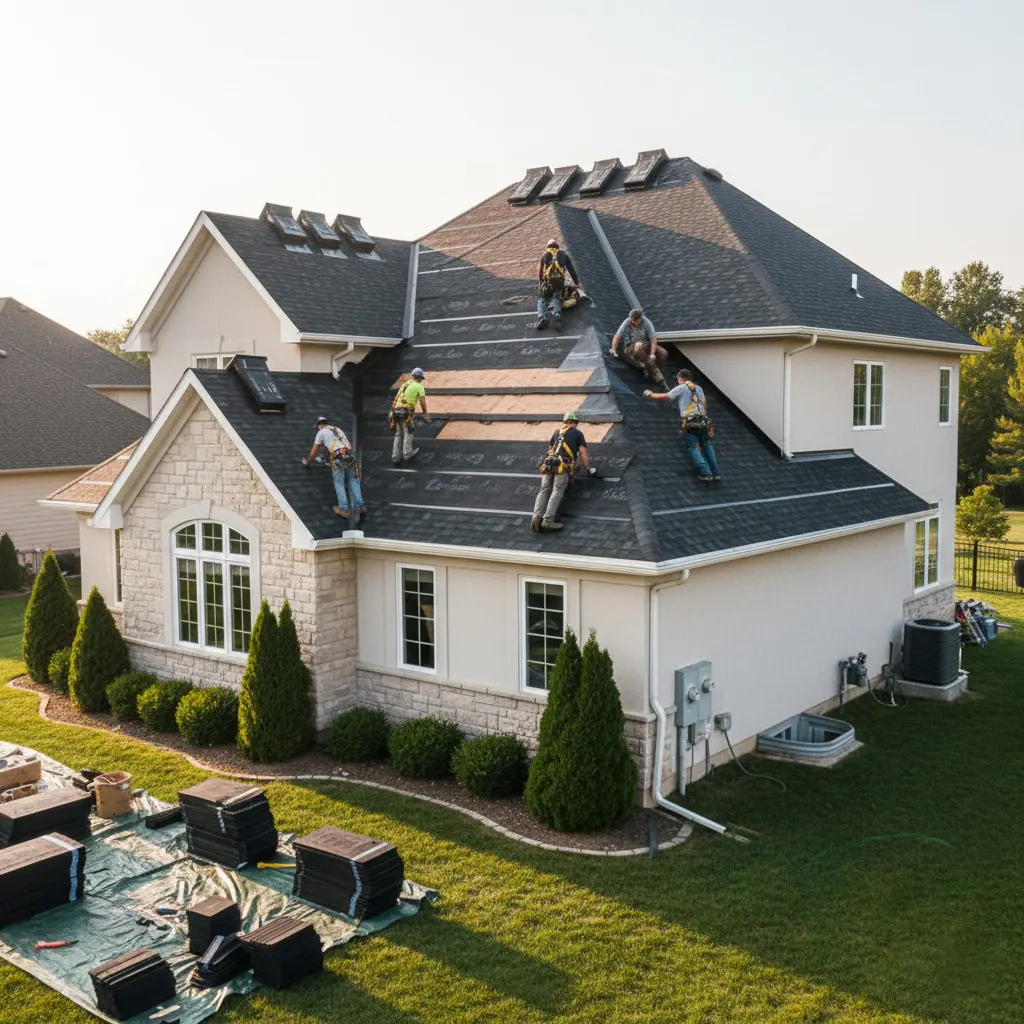
A perfect Syracuse installation starts with a clean slate. We strip the old material down to the wood deck to check for hidden water rot that standard contractors often choose to ignore.
Once the deck is bare, the transformation happens through these critical steps:
- Ice and Water Shield: We apply a high-temp membrane at least six feet up from the eaves to stop standing water from backing up into your living room.
- Synthetic Underlayment: Unlike outdated felt paper, this material resists tearing and provides a superior moisture barrier during the freeze-thaw cycle.
- Starter Strips: We lock the first row of shingles down with factory-applied adhesive to ensure the edge of your roof does not catch the wind.
The goal is a sealed system, not just a covering. We pay attention to the details that most crews skip because they are tucked away from plain sight.
For example, we use corrosion-resistant nails driven at the correct depth—not too shallow and never too deep. If a nail sits proud, it acts as a pathway for water to enter your plywood, leading to expensive rot later on.
When you see a roof installed this way, you are looking at a system that breathes through high-quality ridge vents. A properly installed roof stays cold in the winter to prevent icicles, which is the hallmark of a job done by a true professional.
Vetting Your Contractor: Questions That Expose Corner-Cutting Tactics
Most homeowners make the mistake of hiring based on the lowest bid. That is a fast track to disaster in Syracuse, where cheap labor usually equals shortcuts on the roof deck.
You need to grill your contractor before they touch a single shingle. If they get defensive or vague, show them the door immediately.
The "Must-Ask" List for Syracuse Roofers
Ask these questions to see if they truly understand Central New York roofing requirements:
- Do you use hand-nailing or nail guns? (Hand-nailing allows for better precision, but if they use guns, ask if they adjust the depth to prevent shingle shanks.)
- How exactly will you handle ice and water shield installation in the valleys and eaves?
- What is your specific protocol for attic ventilation calculation?
- Will you be removing the old layers down to the wood deck, or just layering over the top?
Listen closely to how they discuss the Syracuse snow load. An amateur will talk about aesthetics, but a pro will talk about ice dams and attic intake vents.
If they tell you that you don't need new flashing or that your existing ventilation is fine without checking the math, they are cutting corners. Never take their word for it; demand to see their plan for the ridge vents and intake baffles.
A reputable roofer wants you to know exactly how they are protecting your home. If they seem rushed or annoyed by your questions, you have found someone who is likely looking to finish the job as fast as possible, leaving your home vulnerable to the next big freeze.
7. Final Words: Investing in Precision to Secure Your Home’s Future.
Your roof is not just a collection of materials hammered onto your rafters. It is a complex defensive system designed to shield your family from the brutal Syracuse climate.
Cutting corners now might save you a few hundred dollars on the day of installation, but it will cost you thousands in emergency repairs later. When you choose high-quality Asphalt Shingle Roof Installation, you are paying for the peace of mind that your home stays dry during a blizzard.
Precision installation isn't an upsell; it is the absolute baseline for a roof that lasts. Don't let a low-bidder turn your home into a construction site that never stops requiring attention.
Three Pillars of a Lasting Roof
- Quality Materials: Premium shingles and synthetic underlayment withstand thermal shock better than budget alternatives.
- Expert Craftsmanship: A professional who understands local building codes will ensure every nail is placed exactly where it belongs.
- Total System Integrity: Proper ventilation and flashing ensure the roof functions as a single, cohesive unit against water intrusion.
Demand transparency from your contractor before you sign a single contract. If they cannot explain how they handle ice dam mitigation or attic ventilation, you should look for someone else.
Remember, the bitterness of poor quality lingers long after the sweetness of a cheap price is forgotten. Invest in flawless execution today to keep your home protected for decades to come.
People Also Ask
What is the best time of year for asphalt shingle installation in Syracuse, NY?
The ideal time for roof installation in Syracuse is late spring or early autumn when temperatures are moderate. Avoid installation during the harsh winter months, as cold temperatures can prevent shingles from properly sealing and cause them to become brittle during handling.How do I know if my Syracuse roof installation was done improperly?
Common signs of poor installation include uneven shingle alignment, visible gaps in flashing, or premature granule loss shortly after the project is completed. You might also notice interior water stains or ice dams forming along the eaves, which indicate improper ventilation or poor underlayment application.Why is roof ventilation critical for Syracuse homes?
Proper ventilation is essential in Central New York to regulate attic temperatures and prevent moisture buildup. Without it, warm air escaping from the home will melt snow on the roof surface, leading to ice dams that can cause severe water damage to your roof deck and interior ceilings.What specific materials should be used for Syracuse asphalt roofs to prevent ice dams?
To combat Syracuse's heavy winters, contractors should use a high-quality ice and water shield membrane along the eaves, valleys, and roof penetrations. Pairing this with continuous ridge vents and proper intake ventilation ensures the roof deck remains cool, preventing the freeze-thaw cycle that causes ice damming.How much does a typical asphalt shingle roof installation cost in Syracuse?
The cost varies based on roof square footage, pitch, and the quality of materials selected, but homeowners should be wary of quotes significantly lower than the local average. Investing in high-grade materials and professional labor is a critical step to avoid expensive emergency repairs caused by "cheap" installations.Need Roofing Services?
We install and repair roofs to deliver lasting protection for homes and businesses in Syracuse and nearby areas (13202, 13203, 13204, 13205, 13206), completing projects on schedule to minimize disruption.
Get Roofing Quote