

⚡ TL;DR: To ensure your wood shake roof installation in Springfield lasts for decades, avoid common errors by prioritizing proper ventilation, quality materials, and expert craftsmanship during your home project.
📋 What You’ll Learn
Installing wood shakes in Springfield requires navigating our unique New England climate. This guide helps you identify critical installation pitfalls to ensure your cedar roof remains durable, weather-tight, and aesthetically beautiful.
- Master essential ventilation techniques to ensure your cedar shakes can breathe effectively through our humid summers and harsh winters, preventing moisture buildup and premature decay of your roofing material.
- Implement superior underlayment strategies by choosing the correct materials and flashing methods that protect your home from ice dams and water infiltration common during the heavy Springfield snowfall.
- Select high-quality cedar materials by learning how to distinguish between premium-grade wood shakes and low-quality imports that often lead to warping, splitting, and early structural failure of your roof.
- Avoid common installation errors by understanding the precise nailing patterns, necessary spacing gaps, and proper overlap requirements that separate a professional, long-lasting installation from a costly roofing mistake.
📖 Reading time: 7 min
✍️ Author expertise: Springfield roofing expert with fifteen years of experience installing cedar roofs across Massachusetts.
Your home in Springfield is your biggest investment, and a wood shake roof is the ultimate way to give it that timeless, rugged charm. But there is a dirty secret in the roofing trade: if your contractor gets even one step wrong during the installation, that beautiful cedar will rot, warp, or leak long before its time.
I have seen too many homeowners flush thousands of dollars down the drain because they trusted a guy with a truck and a nail gun instead of a pro who respects the wood. You are not just buying materials; you are paying for the expertise to keep the New England weather out of your living room for decades.
Before you sign a contract or let a crew climb onto your eaves, you need to know exactly how to spot the red flags that ruin a wood roof. Read on to discover the fatal mistakes that could cost you your entire roof and how to ensure your project stays rock solid from day one.
1. The Science of Ventilation: Why Cedar Needs to Breathe in New England’s Climate
Here is the hard truth about cedar: it is an organic, living material. In a climate like Springfield, where we swing from humid, sticky summers to bitter, snow-packed winters, your roof acts like a lung. If you trap moisture beneath those shakes, you aren't just installing a roof; you are building a rotting machine.
Most amateur installers think cedar is just like asphalt shingles. They slap it down tight, seal it off, and think they did a great job. They are wrong. Without proper airflow, trapped condensation becomes the silent killer of your roof deck.
You need a sophisticated ventilation strategy to keep your investment healthy. Here is what your contractor must prioritize to ensure your cedar stays dry:
- Continuous Ridge Vents: These allow hot, moist air to escape at the highest point of the roofline.
- Proper Intake Vents: You need a clear, unobstructed path at the soffits for cool air to enter the attic.
- Baffles: These prevent attic insulation from choking off your intake airflow.
- Cedar Breathers: These specialized drainage mats are non-negotiable. They create a physical air gap between the shakes and the underlayment, allowing the back of the wood to dry out completely.
If your installer tells you that a "tight" roof is a better roof, show them the door immediately. Cedar needs to breathe, or it will buckle, split, and curl long before you see any return on your money. Don't let a contractor suffocate your home.
The Critical Importance of Proper Underlayment and Flashing Techniques
Most homeowners obsess over the color of the cedar shakes, but the real magic happens underneath the wood. If your contractor treats the underlayment like an afterthought, you are inviting disaster before the first shake is even laid.
In Springfield, we deal with intense freeze-thaw cycles that push moisture into every crevice. If your underlayment is not a high-temperature, self-adhering membrane, that moisture will sit against your roof deck and cause rot from the inside out.
You need a system that acts as a second skin. Here is where most bottom-tier installers cut corners:
- Skipping the ice and water shield in the valleys.
- Using cheap, paper-thin felt that tears during installation.
- Failing to provide a proper drainage gap between the shakes and the underlayment.
Then there is the metalwork. Flashing is the silent bodyguard of your home, and it is usually the first thing to fail on a amateur job. If your flashing is not properly integrated into the roofing system, water will track right past those expensive shakes and into your attic.
Never allow a contractor to simply caulk over a bad flashing joint. That is a temporary fix that will be leaking again the moment our first big New England Nor'easter hits. True professionals use custom-bent metal and precise, step-flashing techniques that direct water away from chimneys, walls, and dormers.
Do not let your investment be compromised by lazy workmanship. Demand to see their plan for flashing details before they touch a single hammer. If they tell you, "don't worry about it, we've done it this way for years," find someone else immediately.
Selecting Premium-Grade Materials: Avoiding Low-Quality Imports and Thin Shakes
Not all cedar shakes are created equal, and in the roofing world, you get exactly what you pay for. Cheap, imported wood is often harvested from younger trees that lack the natural oils and density required to survive a brutal Springfield winter.
When a contractor tries to sell you on a "budget-friendly" shake, they are usually cutting corners on the grade of the wood. If the shakes are too thin or contain too much sapwood, they will curl, crack, and fail within a few short years.
To ensure your roof stands the test of time, you need to demand Certi-Label products. These shakes undergo rigorous third-party inspections to verify their quality and longevity.
What to Look for in High-Quality Cedar
- Edge-Grain vs. Flat-Grain: Always insist on 100% edge-grain cedar. It is far more dimensionally stable and resists the warping that ruins inferior roofs.
- Thickness Matters: Never settle for "thin" shakes. Premium shakes are thicker at the butt end, which provides better insulation and resistance against wind uplift.
- Avoid Imports: Stick to wood sourced from reputable mills in North America. These timbers are properly kiln-dried or air-seasoned to handle our specific moisture levels.
Do not let a salesperson convince you that generic, off-brand shakes are just as good as the premium grade. Saving a few dollars on materials today will cost you thousands in premature repairs tomorrow.
Common Installation Blunders: Spacing, Nailing Patterns, and Overlap Errors
Cedar shake is a living material, and it demands room to move. Most amateur installers treat wood like asphalt shingles, jamming them tight together. If you don't leave a 1/4 to 3/8-inch gap between every shake, the wood will expand during our humid Springfield summers and buckle, crack, or pop right off your roof deck.
Then there is the issue of the nailing pattern. I have seen guys drive nails right through the butt of a shake or use the wrong gauge of stainless steel, causing the wood to split prematurely. Proper installation requires two nails per shake, positioned exactly where they won't interfere with the water shed.
If your installer gets lazy with the overlap or the vertical alignment, you are left with a direct path for moisture to reach your felt paper. Keep these critical installation red flags in mind:
- No side lap alignment: The joints between shakes must be offset by at least 1.5 inches in every subsequent course.
- Face nailing: Never drive nails through the exposed face of the shake, as this creates a direct hole for rainwater to bypass your shingle.
- Ignoring coursing requirements: Improper exposure lengths leave your roof vulnerable to wind-driven rain and snow accumulation.
Remember, your roof is a system, not a puzzle. If your crew doesn't understand that every piece of cedar needs to breathe and shed water independently, you are essentially paying for a future leak. Do not let them rush the layout, because once those nails are in, the damage is already done.
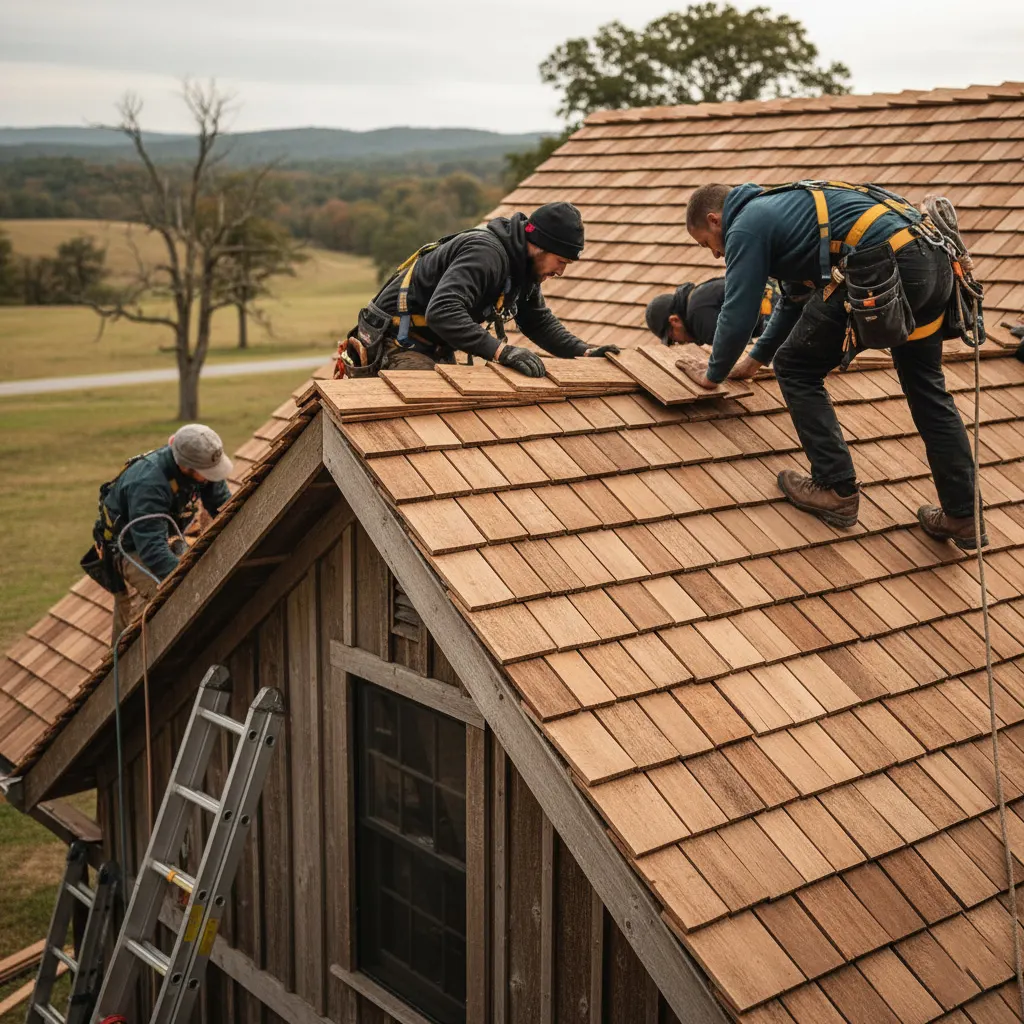
A Springfield Success Story: Restoring a Historic Colonial with Precision Cedar Craftsmanship
Last autumn, we took on a classic Colonial property in the Forest Park neighborhood that was suffering from severe moisture damage. The previous owner had opted for cheap, thin shakes installed flat against the deck without a breathable underlayment, turning their roof into a giant, rotting sponge.
We stripped that mess down to the rafters and rebuilt it with the old-school precision that a historic home deserves. By installing a proper cedar breather mat, we allowed air to circulate under every single shake, effectively turning the roof into a dry, ventilated system.
Key Details of the Restoration:
- We used premium, edge-grain Western Red Cedar, which is naturally resistant to our erratic New England rot cycles.
- Each shake was installed with stainless steel fasteners to prevent the unsightly, corrosive streaks common with low-grade nails.
- We hand-cut custom copper flashing for every valley and chimney to ensure water never finds a way inside.
The result was more than just a roof. It was a total preservation of the home's original character while ensuring it would stand up to the heavy snows and humid summers typical of Springfield.
When you look at this home today, the roof looks sharp and sits perfectly uniform. That happens only when you treat wood as a living material that needs to breathe, rather than just another commodity to nail down as fast as possible.
Essential Maintenance Practices to Extend the Lifespan of Your New Wood Roof
Cedar is a living, breathing material, not a static slab of asphalt. If you want your roof to survive the harsh Springfield winters, you cannot simply install it and walk away.
Neglect is the quickest way to turn an expensive investment into a pile of expensive kindling. You must stay proactive to keep the rot at bay.
Routine Care for Cedar Longevity
Follow these simple rules to keep your roof healthy throughout the seasons:
- Clear away debris and leaves every spring and autumn. If organic material stays trapped between the shakes, it holds moisture against the wood, which is a recipe for rapid decay.
- Keep your gutters spotless. If water cannot escape, it backs up into your shingles and invites mold to set up shop in your attic.
- Trim back any overhanging tree branches that scrape against your roof. These limbs abrade the surface of the wood and keep the area permanently shaded, preventing the roof from drying out.
Do not be tempted by aggressive pressure washing. High-pressure water strips the natural oils from the wood and drives moisture deep into the structural fibers.
If you see moss or lichen starting to take root, use a mild, professional-grade cleaning solution specifically formulated for cedar. When in doubt, call a specialist who understands how to treat wood without destroying its integrity.
7. Final Words: Choosing the Right Contractor for Your Springfield Investment.
Most roofing contractors treat wood shakes like cheap asphalt shingles. They rush through the job, use the wrong fasteners, and leave your home vulnerable to the first heavy snowstorm.
When you are investing in a high-end cedar roof, you need a specialist. A general handyman is a recipe for a warranty disaster.
What to demand from your contractor
Before you commit, grill your potential roofer on their specific experience with wood shake roof installation. You want someone who treats every shingle as an individual piece of art.
- Ask for a portfolio of recent wood projects right here in Springfield.
- Demand proof of specialized training for cedar installs.
- Check if they understand the local municipal codes and historical preservation guidelines.
True craftsmanship is never the cheapest option on the quote sheet. If a bid comes in significantly lower than the others, run the other way.
They are likely cutting corners on the flashing or skipping the critical ventilation gaps. You pay for peace of mind, not just the wood on top of your house.
Always verify their insurance coverage for roofing work. A slip-up on your roof is a massive liability that you do not want landing on your shoulders.
Ask them directly: "How do you handle cedar expansion?" If they look at you blankly, find someone else.
The right pro will walk you through the entire process with total transparency. They will treat your Springfield property like it belongs to their own family.
People Also Ask
Is wood shake roofing a good choice for the climate in Springfield, MA?
Wood shakes are an excellent choice for New England homes because they are naturally resistant to wind and provide superior insulation. However, they require precise installation and proper ventilation to withstand the moisture and freeze-thaw cycles typical of the Springfield area.How long should a properly installed wood shake roof last?
When installed correctly using high-quality cedar and proper ventilation, a wood shake roof can last between 30 and 50 years. Longevity depends heavily on regular maintenance, such as removing debris and ensuring the shakes remain dry to prevent rot.What is the biggest mistake contractors make when installing wood shakes?
The most common mistake is failing to provide adequate airflow beneath the shakes, which traps moisture and accelerates decay. Improper spacing between shakes is another critical error, as wood needs room to expand and contract during seasonal temperature changes in Massachusetts.Can I install wood shakes over an existing roof?
It is generally not recommended to install wood shakes over an existing roof because it prevents the system from breathing correctly. A complete tear-off allows the installer to inspect the roof deck for damage and ensures the necessary underlayment and ventilation systems are installed for optimal performance.How much does professional wood shake installation cost in Springfield?
The cost of wood shake installation varies based on the roof square footage, the grade of cedar selected, and the complexity of the architectural details. Because this is a specialized craft, homeowners should expect a higher investment compared to asphalt shingles, reflecting the durability and historic aesthetic of natural wood.Need Roofing Services?
We deliver fast roof installations and repairs across Springfield, MA and nearby areas (01103, 01104, 01105, 01108, 01109) to keep properties protected from weather damage.
Get Roofing Quote