

⚡ TL;DR: This informative guide explains the importance of roof ventilation installation for Palm Bay homeowners, offering practical steps to improve attic airflow, reduce energy expenses, and protect roof longevity.
📋 What You’ll Learn
Effective attic ventilation is essential for protecting your Palm Bay home from Florida's intense heat. This guide provides the practical knowledge needed to ensure proper airflow, extend roof longevity, and improve efficiency.
- Master the science of attic heat by understanding how Florida’s humidity and soaring summer temperatures interact with your roofing materials to trap damaging thermal energy inside your ceiling spaces.
- Identify hidden signs of poor ventilation before they lead to structural rot or mold, allowing you to catch issues like warped shingles and insulation damage early in the process.
- Select the right intake and exhaust systems that work in harmony to maintain a balanced pressure, ensuring that fresh air continuously cycles through your attic to prevent heat buildup.
- Follow our professional installation steps to correctly position your ventilation components, avoiding common pitfalls that often lead to leaks, inefficient energy performance, and unnecessary long-term roofing repair costs.
📖 Reading time: 7 min
✍️ Author expertise: Master roofer with over fifteen years of installing ventilation systems across Palm Bay homes.
Most Palm Bay homeowners think their roof is just a shield against the Florida sun, but if your attic feels like a blast furnace, your shingles are literally cooking from the inside out. This trapped heat doesn't just spike your cooling bills; it shaves years off the lifespan of your roof.
You might be surprised to learn that a simple, strategic airflow fix can drop those attic temperatures by thirty degrees or more. It is the cheapest insurance policy you can buy for your home’s most expensive asset.
Stop paying to air condition your insulation and start protecting your investment with the right ventilation setup. Keep reading to discover exactly how to get your attic breathing correctly before your next roof replacement becomes an emergency.

1. The Science of Attic Heat: How Florida’s Climate Impacts Your Roofing System
In Palm Bay, the sun does not just shine; it hammers your home with relentless intensity. When that solar radiation hits your asphalt shingles, the surface temperature can skyrocket well past 150 degrees.
Without a way for that heat to escape, your attic transforms into a pressurized oven. The trapped thermal energy has nowhere to go, so it radiates downward into your living space and outward, cooking your roofing materials from beneath the surface.
This cycle of extreme heat buildup creates a destructive chain reaction for your home:
- Thermal shock causes shingles to blister, crack, and lose their protective granules prematurely.
- The intense heat softens the bitumen in asphalt shingles, leading to curling and structural failure.
- Your air conditioning system works double time to fight the heat radiating through your ceiling, leading to premature mechanical burnout.
Think of your roof like an engine. If you block the cooling system, the engine eventually seizes up and dies. Proper ventilation serves as the radiator for your house, allowing a constant exchange of air that prevents the structure from cooking in the Florida humidity.
Identifying the Warning Signs of Poor Attic Ventilation in Palm Bay Homes
Your attic shouldn't feel like a sauna when you pop the hatch in July. If you notice these red flags, your roof is likely choking, and your energy bills are taking the hit.
Keep a sharp eye out for these silent killers of your roof system:
- High Energy Bills: If your AC is running non-stop but the house still feels muggy, your attic is dumping heat back into your living space.
- Premature Shingle Aging: Look at your shingles from the curb. If they look curled, cracked, or are losing their granules, they are literally being baked from underneath.
- Rusty Nails or Wood Rot: Moisture loves a poorly ventilated attic. Check your rafters for dark spots or soft wood; that is a sign of trapped condensation wreaking havoc.
- The Smell Test: A musty, damp odor in the upper levels of your home is a clear indicator that mold or mildew is taking root in your insulation.
Ignore these signs and you are rolling the dice with your home’s structural integrity. When heat stays trapped, it creates a pressure cooker effect that destroys your roof deck and ruins your shingles from the inside out.
Don't wait for a leak to show up on your ceiling. If you see signs of blistering paint near your roofline or find your insulation feels damp to the touch, you need to act fast. Proper ventilation isn't just a luxury; it is the difference between a roof that lasts twenty years and one that fails in ten.
Key Components of a Balanced Intake and Exhaust Ventilation System
Most folks in Palm Bay treat their roof like a static lid on a pot, but it actually needs to function like an engine. To keep your attic from turning into a convection oven, you need a balanced setup that moves air from the bottom up.
Think of your roof like a chimney. You need cool air pulling in at the eaves and hot air pushing out at the peak. If one side is missing, the whole system stalls and your roof starts baking from the inside.
Here are the two essential parts of a healthy attic ventilation system:
- Intake Vents: These are installed at the soffit or the low edge of your roof. They act as the fresh air intake, grabbing cooler air from the outside to replace the sweltering air stuck under your rafters.
- Exhaust Vents: Located near the ridge or the highest point of the roof, these allow the heated air to escape. Warm air naturally rises, and these vents provide a clear exit path.
The secret is perfectly balanced flow. If you install powerful exhaust vents but neglect the intake, you create negative pressure. That causes your attic to suck conditioned air right out of your living space through tiny cracks in your ceiling.
By getting the math right, you ensure a continuous cycle of air movement. This doesn't just stop the heat buildup; it prevents moisture from settling and causing wood rot or mold during those humid Florida rainy seasons.
Check your current setup to see if you have both components working in harmony. If you see intake vents that are clogged with paint or insulation, you have already choked off half of your roof's cooling power.
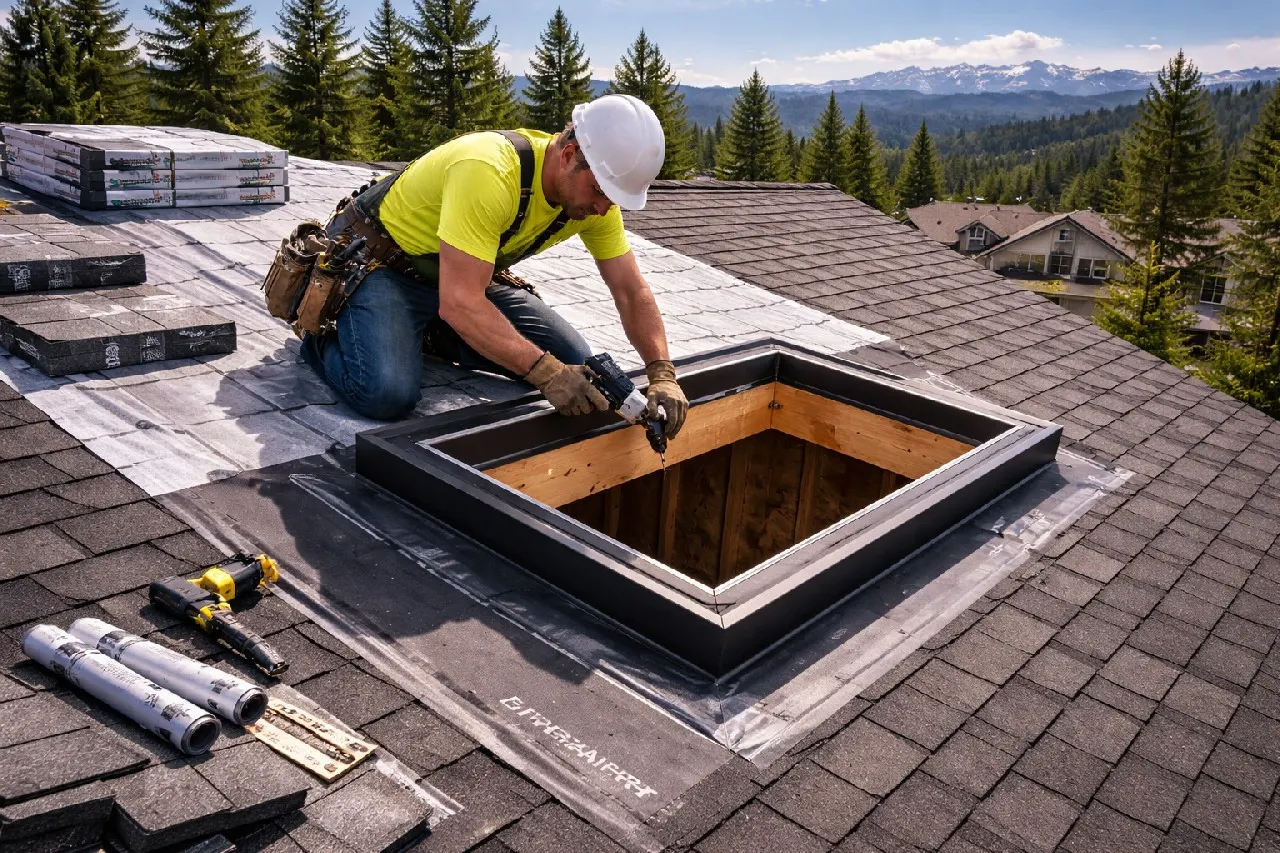
Step-by-Step Installation Process: Ensuring Proper Airflow for Your Attic
Getting your attic to breathe isn't just about hacking holes in your roof; it is about precision. If you cut the wrong intake or exhaust, you ruin the pressure balance and invite moisture issues that lead to mold.
First, we calculate the Net Free Ventilating Area based on your attic's square footage. Palm Bay homes require a specific ratio of intake at the eaves and exhaust at the ridge to create a continuous, convective loop.
Here is how the professional installation process breaks down:
- Clear the soffits: We remove old, clogged insulation that blocks air pathways. If the air can't get in at the bottom, the roof won't stay cool.
- Install baffle chutes: These keep the insulation from sliding into the intake vents, ensuring a clear channel for air to travel upward.
- Cut the ridge vent: We cut a precise channel along the peak of your roof, taking care to leave the structural rafters intact.
- Seal the gaps: We cap the ridge with weather-resistant shingles that allow air to escape while blocking wind-driven rain.
Once the vents are set, we perform a smoke test to confirm the airflow pattern. We want to see a consistent movement of air moving from the soffits up to the ridge, effectively flushing out the superheated air before it can cook your shingles.
Trying to guess your ventilation needs is a recipe for a shortened roof life. When we install these systems, we ensure the intake and exhaust points are perfectly matched to your specific roof pitch and home geometry.

Case Study: Reducing Energy Costs and Extending Roof Life in a Bayside Lakes Residence
We recently took on a project in the Bayside Lakes community where the homeowner’s AC was running nonstop, yet the upstairs remained stifling. Their asphalt shingles were curling prematurely, a classic sign of heat-damaged roof structures caused by a stagnant attic.
After a quick inspection, we realized their passive ventilation was completely blocked by old fiberglass insulation. We swapped out their outdated, clogged vents for a high-performance ridge vent system and installed proper soffit baffles to force fresh air through the eave.
The results were immediate and measurable:
- The attic temperature dropped by 35 degrees during the hottest part of the day.
- Their monthly utility bill saw a direct 18% reduction within the first billing cycle.
- The interior humidity levels stabilized, preventing moisture buildup near the roof decking.
By simply allowing the attic to breathe, we stopped the cooking effect that ruins shingles from the underside. This homeowner turned a high-cost energy drain into a passive system that actually pays for itself through longer roof life and lower cooling demands.
Common Ventilation Pitfalls and How to Avoid DIY Installation Errors
The biggest mistake I see Palm Bay homeowners make is mixing different types of exhaust vents. You cannot just throw a powered fan onto a roof that already has passive ridge vents.
When you mix these systems, the powered fan actually steals air from the other vents instead of pulling it from the soffits. This creates a dead zone where moisture collects, eventually leading to mold growth right over your living room.
Here are the traps that turn a simple project into a costly disaster:
- Blocking your soffit vents with attic insulation, which stops the intake process entirely.
- Installing vents that are not rated for Florida's heavy rainfall, leading to leaks during hurricane season.
- Failing to calculate the Net Free Ventilating Area, which results in having too much exhaust and not enough intake.
Most DIYers think more is better, but ventilation is a math problem, not a guessing game. If you cut too many holes in your roof deck, you compromise the structural integrity and invite unwanted pests into your attic.
You also risk voiding your shingle manufacturer's lifetime warranty if the installation does not meet specific building code requirements. When in doubt, let a pro handle the structural cuts so you do not wake up to water stains on your ceiling after the next summer thunderstorm.
Final Words
Your roof is the most expensive component of your home, and in Florida, it takes a brutal beating every single day. Ignoring your ventilation system is essentially inviting premature rot and skyrocketing power bills.
If you have questions about your specific setup or suspect your current system is failing, our team is ready to help. Proper Roof Ventilation Installation is not just a luxury; it is a necessity for long-term protection.
Take these steps to ensure your roof stands the test of time:
- Inspect your soffit vents to ensure they are not blocked by attic insulation.
- Check for signs of moisture or mold growth on the underside of your roof deck.
- Consult with a licensed professional before attempting to cut into your roof structure.
Do not wait for a major leak or a structural failure to address these issues. A proactive approach will save you thousands of dollars in emergency repairs down the road.
People Also Ask
Is roof ventilation necessary for homes in Palm Bay, Florida?
Yes, roof ventilation is essential in Palm Bay to combat extreme humidity and heat buildup. Proper airflow prevents trapped moisture from causing mold and helps your air conditioning system run more efficiently during the hot summer months.How do I know if my Palm Bay attic has poor ventilation?
Common warning signs include unusually high energy bills, prematurely curling roof shingles, and visible signs of mold or mildew in your attic. If your attic feels significantly hotter than the outside air temperature, your ventilation system is likely insufficient.What is the best type of roof ventilation for a Florida climate?
A balanced system consisting of continuous ridge vents combined with soffit intake vents is typically the most effective. This setup utilizes natural convection to push hot air out of the attic while drawing in cooler air from the eaves.Can I install attic ventilation myself?
While some minor components can be installed by homeowners, professional installation is highly recommended for roofing projects. Improper installation can lead to roof leaks, voided manufacturer warranties, and structural damage if the integrity of the roof deck is compromised.How does proper ventilation impact the lifespan of my shingles?
Excessive heat trapped in the attic bakes your shingles from the underside, causing them to become brittle and crack prematurely. By maintaining a cooler attic temperature through ventilation, you significantly extend the lifespan of your roofing materials.Need Roofing Services?
We deliver roofing repairs and replacements in Palm Bay and nearby areas to restore property protection through timely project handling. (32905, 32907, 32908, 32909)
Get Roofing Quote