


⚡ TL;DR: This guide outlines essential steps for tile roof installation in Palm Bay, focusing on structural reinforcement and wind resistance to ensure long-term durability for your coastal property.
📋 What You’ll Learn
Installing a tile roof in Palm Bay requires specialized knowledge of coastal weather demands. This guide provides the expert insights you need to ensure your investment stands strong against Florida’s elements.
- Select superior materials for coastal climates by understanding why concrete and clay tiles provide the best durability, thermal resistance, and aesthetic appeal for homes located near the Atlantic Ocean.
- Master critical roof deck preparation steps to ensure your home’s structure can safely support the significant weight of heavy tile while maintaining long-term integrity against the humid Florida environment.
- Implement high-wind underlayment and fastening systems to safeguard your property against intense tropical storms and hurricane-force gusts, meeting the strict building codes required for our local Palm Bay area.
- Follow professional tile installation procedures through a step-by-step breakdown of the process, from applying specialized waterproof layers to the precise placement and alignment of individual roofing tiles for stability.
- Develop effective long-term maintenance habits that protect your roof from debris and salt buildup, ultimately extending the lifespan and performance of your premium tile roofing system for decades ahead.
📖 Reading time: 8 min
✍️ Author expertise: Master roofer with two decades of experience installing coastal tile systems in Palm Bay.
Salt air is aggressive, and the Florida sun is relentless on your property. If your current roof is curling, cracking, or turning your attic into a furnace, you are likely burning through money every single month.
A tile roof in Palm Bay isn't just about curb appeal; it is a battle-tested armor against hurricane-force winds and moisture damage. When installed correctly, it is the last roof your home will ever need.
Most homeowners make expensive mistakes because they treat roof installation like a commodity purchase. Stick with me as we break down exactly how to protect your investment and ensure your tile roof stays locked tight during the next big storm.
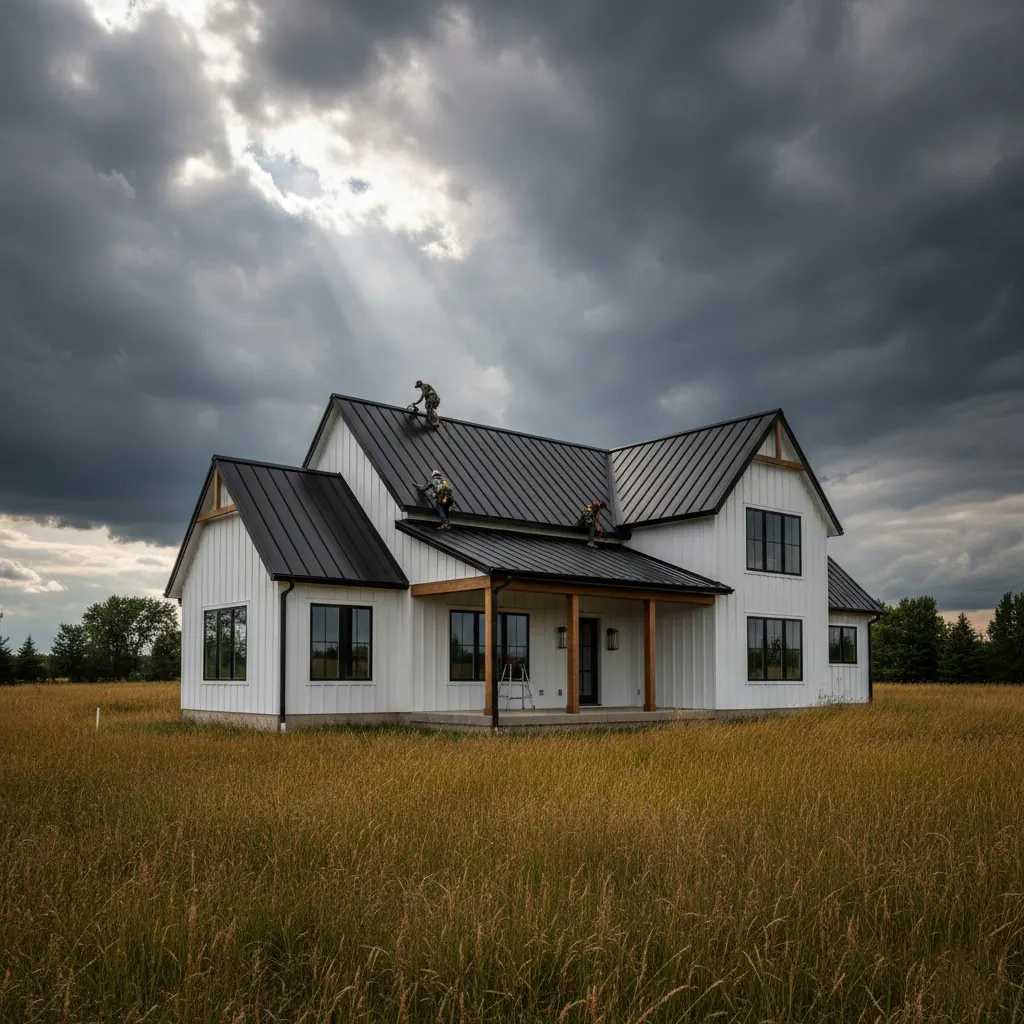
Why Concrete and Clay Tiles Are the Gold Standard for Palm Bay’s Climate
In Palm Bay, your roof faces two enemies that never take a day off: intense UV radiation and corrosive salt spray. Asphalt shingles soften and lose their granules under this constant thermal assault, but tile roofing thrives.
Whether you choose concrete or clay, these materials possess a natural thermal mass that keeps your home significantly cooler. By reflecting sunlight and allowing air to circulate beneath the tiles, they prevent your attic from becoming a heat trap.
Here is why high-end builders prefer tiles for the Space Coast:
- Superior Heat Reflection: Clay tiles naturally dissipate heat, drastically lowering your monthly air conditioning bills.
- Salt Corrosion Resistance: Unlike metal roofing which can rust or deteriorate in coastal environments, tiles are chemically inert to salt air.
- Fire Protection: Both clay and concrete tiles carry a Class A fire rating, providing an essential layer of defense against localized brush fires.
- Longevity: While other roofs reach their expiration date in 15 years, a properly installed tile roof can easily last 50 years or more.
Concrete tiles are a heavyweight champion when it comes to impact resistance. They are specifically engineered to withstand the debris-heavy winds that define Florida hurricane seasons.
Clay tiles, meanwhile, offer an aesthetic that never fades, as the color is baked directly into the material. Investing in these materials isn't just about utility; it is about securing your home’s structural integrity against the volatile Florida weather.
Critical Site Preparation: Preparing Your Deck for the Weight of Tile
Before a single tile hits your roof, we have to talk about the structural reality of your home. Clay and concrete tiles are heavy, often weighing upwards of 1,000 pounds per square, which is a massive load compared to lightweight shingles.
If your deck isn't ready, your roof will sag, crack, or—in a worst-case scenario—fail entirely. We inspect every inch of your existing plywood or OSB to ensure it can handle the burden without bowing.
Here is what we look for during the inspection:
- Rot and moisture damage that compromises the structural integrity of the wood.
- Proper deck thickness, which usually requires 5/8-inch plywood for heavy tile systems.
- The need for additional bracing or rafters if your coastal home has older, thinner trusses.
Think of the deck as the foundation of your roof. If it’s soft, uneven, or damaged, the best tiles in the world won’t save you from a sagging mess down the road.
We don't cut corners here because we know that shortcuts lead to structural failure. Before moving to the waterproofing phase, we make sure that every rafter is reinforced and every piece of decking is nailed down tight to handle the massive dead load of a tile system.

The Importance of High-Wind Underlayment and Fastening Systems
Palm Bay homes face a brutal reality check during hurricane season. If your underlayment is subpar, your entire roof system is essentially a house of cards waiting for the first gust to knock it down.
You cannot cut corners here. The underlayment acts as your second line of defense against moisture intrusion, especially when driving rain pushes water underneath the tiles.
For coastal properties, we insist on high-temperature, self-adhering membranes that seal around every single nail penetration. This creates a waterproof seal that protects your roof deck even if a tile shifts or breaks during a storm.
Locking Your Roof Down
Fastening is where most budget roofing companies fail you. They use standard nailing techniques that just do not hold up against Category 3 or 4 wind speeds.
To keep your tiles from becoming projectiles, we utilize specific wind-mitigation hardware. We go beyond the bare minimum building codes to ensure your home stays buttoned up tight:
- Ring-shank nails: These provide superior withdrawal resistance compared to smooth nails.
- Mechanical fastening: Every single tile is secured according to the manufacturer’s high-wind requirements.
- Adhesive foam mounting: This technique bonds the tile to the underlayment, adding a massive layer of wind uplift resistance that physical fasteners alone cannot match.
If you live on the water in Palm Bay, wind uplift is the primary enemy. Proper fastening effectively transforms your individual tiles into a singular, integrated shield that wind cannot easily grab.
Don't gamble with your family's safety. A roof that is barely held together is a liability, not an asset.
Step-by-Step Execution: From Waterproofing Layers to Tile Placement
Installing a tile roof in Palm Bay is a high-stakes precision game. One wrong move, and you leave your home vulnerable to water intrusion during our intense tropical downpours.
Our crew starts with the foundation of the system: the waterproofing underlayment. We apply a high-temp, self-adhering modified bitumen membrane directly to the roof deck.
This creates a secondary seal that protects your home even if a tile shifts or breaks during a storm. We treat every single roof penetration, like vents and chimneys, with extra layers of sealant to lock out moisture.
The Installation Sequence
Once the deck is armored, we move to the layout. The physical placement of the tiles is a methodical process that keeps the roof secure against uplift.
- First, we install horizontal battens to provide a solid nailing point for the tiles.
- We align the tiles with laser precision to ensure proper water shedding and airflow.
- Every tile at the perimeter, eaves, and ridges is mechanically fastened using stainless steel screws or hurricane clips.
We do not rely on gravity to keep your roof in place. By individually securing the tiles, we create a locked-in system that resists the powerful lift generated by hurricane-force winds.
Throughout the process, we maintain strict spacing to ensure proper drainage. A tile roof is meant to "breathe" while staying completely dry underneath, which is exactly why our installation sequence prioritizes that gap between the deck and the tile surface.
Case Study: Storm-Proofing a Waterfront Property in Palm Bay
We recently took on a project for a client living directly on the Indian River Lagoon. This home faced the triple threat of constant salt spray, high-velocity winds, and direct exposure to the Atlantic moisture.
The previous asphalt roof had shredded after only a few years, leaving the wood deck exposed to rot. We stripped the old materials and reinforced the structure to handle the massive load of premium clay tiles.
Here is exactly how we locked this property down:
- We installed a dual-layer, self-adhered underlayment that seals around every single nail penetration.
- Every individual tile was secured using a hurricane-rated foam adhesive system, which provides far superior uplift resistance compared to standard nails.
- We added extra flashing at every valley and penetration point to ensure that wind-driven rain has no path to penetrate the roof deck.
The result was a roof that looks like a piece of Mediterranean art but acts like a fortress. By using heavy-duty, wind-resistant fasteners and modern waterproofing membranes, this homeowner doesn't sweat when the hurricane warnings start flashing on the news.
They invested in total peace of mind, knowing their equity is shielded by one of the strongest roofing systems currently available in Florida.
Essential Maintenance Practices to Maximize Your Tile Roof’s Lifespan
Even the toughest tile roof needs a little love to survive the salt-heavy air of Palm Bay. Neglect is the silent killer of roofing systems, leading to debris buildup that traps moisture right where you do not want it.
You should inspect your roof twice a year, ideally before and after the peak hurricane season. A simple visual check from the ground with binoculars can reveal cracked tiles or displaced fasteners that need immediate attention.
The Proactive Checklist for Homeowners
To keep your roof performing like new, stay on top of these specific maintenance tasks:
- Clear debris immediately: Remove pine needles, leaves, and branches from valleys where water flows. Organic matter acts like a sponge, keeping your tiles constantly damp.
- Schedule professional cleanings: Hire a licensed contractor to perform a low-pressure wash every few years. This removes algae and salt deposits that can degrade the surface coating of your tiles.
- Check for cracked tiles: If you see a broken tile, replace it right away. An open gap invites water directly onto the underlayment, which is the actual line of defense for your home.
Never walk on your roof unless you absolutely have to. Tile is durable, but improper foot traffic will cause structural cracks that you might not notice until the next heavy rainstorm.
If you find moss or mold growing in shaded areas, do not ignore it. These growths are more than a cosmetic nuisance; they hold moisture against the tile surface and can cause long-term deterioration of the protective finish.
Final Words: Investing in Long-Term Protection for Your Coastal Home
Choosing a tile roof is a significant capital commitment, but it pays dividends when you look at the total cost of ownership. Instead of paying for a cheap, temporary fix every decade, you are locking in peace of mind for thirty, forty, or even fifty years.
When you prioritize professional Tile Roof Installation, you stop viewing your roof as an expense. It becomes an asset that secures your equity against the unpredictable Florida weather.
Think about what you gain by doing this correctly the first time:
- Reduced insurance premiums due to superior impact resistance.
- Lower cooling bills thanks to the natural thermal mass of concrete and clay.
- Unmatched property value that attracts serious buyers if you ever decide to sell.
Do not be tempted by the lowest bid from a contractor who cuts corners on the underlayment or the fastening schedule. A roof is only as strong as its weakest point, and in Palm Bay, a missing nail or cheap felt paper is an invitation for disaster.
Stay focused on the long game. By choosing high-grade materials and certified installers, you ensure that your home remains a fortress, not a liability. When the next storm rolls off the Atlantic, you will sleep soundly knowing your roof is anchored to stay.
People Also Ask
Are tile roofs better for coastal homes in Palm Bay?
Yes, tile roofs are excellent for coastal environments because they are highly resistant to salt air corrosion and fire. Their durability makes them a top choice for protecting Palm Bay homes against the intense sun and tropical storms.How heavy are concrete tiles compared to asphalt shingles?
Concrete tiles are significantly heavier than asphalt shingles, often weighing between 800 to 1,000 pounds per square. Because of this added load, a professional structural inspection is required to ensure your roof deck can safely support the weight.Do tile roofs need special underlayment in Florida?
Absolutely, because Florida building codes require high-performance, water-shedding underlayments to prevent leaks during wind-driven rain events. Using a synthetic, self-adhering underlayment provides the best secondary moisture barrier for your home.How long does a tile roof installation take?
A typical tile roof installation in Palm Bay can take anywhere from one to three weeks depending on the size of the home and the complexity of the roof design. Proper staging and weather monitoring are essential to keep the project on track.Are tile roofs resistant to high winds?
When installed with a code-compliant fastening system, such as hurricane clips or mortar-set methods, tile roofs are incredibly resistant to high winds. They are engineered to withstand extreme gusts, making them one of the most reliable options for hurricane-prone areas.Need Roofing Services?
We deliver roofing repairs and replacements in Palm Bay and nearby areas to restore property protection through timely project handling. (32905, 32907, 32908, 32909)
Get Roofing Quote