


⚡ TL;DR: To protect your home from harsh regional weather, follow these five essential roof maintenance tips to prevent costly damage and extend the overall lifespan of your Kansas City roof.
📋 What You’ll Learn
Protecting your home from the harsh Kansas City climate requires a strategic approach to roof care. In this guide, you will discover the essential maintenance steps to ensure your roof's longevity.
- Identify storm damage early by learning how to spot loose shingles or granule loss caused by our unpredictable local wind, hail, and severe thunderstorm patterns common in Kansas.
- Clear debris from gutters to ensure water flows freely away from your foundation, preventing the structural damage and interior leaking that often plague Kansas City homes after heavy rain.
- Trim nearby overhanging branches to eliminate the friction and moss growth that physically abrades your shingles, ensuring your roof stays clear of debris that traps moisture against the surface.
- Optimize your attic ventilation to manage the extreme temperature swings between our sweltering summers and freezing winters, which is critical for preventing ice dams and premature shingle thermal stress.
- Evaluate DIY versus professional help by understanding the specific warning signs that indicate when a simple roof maintenance task has become a job for a licensed local roofing contractor.
📖 Reading time: 7 min
✍️ Author expertise: Master roofer with two decades of experience repairing and maintaining Kansas City area homes.
Most Kansas City homeowners ignore their roof until a ceiling stain appears or water starts dripping onto their living room floor. By the time you notice the problem, the repair bill has already tripled.
Our local weather cycle is brutal. Between the scorching summer sun and the ice dams that form every winter, your roof takes a beating that most people simply choose to ignore.
You do not need a degree in engineering to stop your investment from rotting away. Here are five simple steps you can take today to protect your home before the next storm hits.
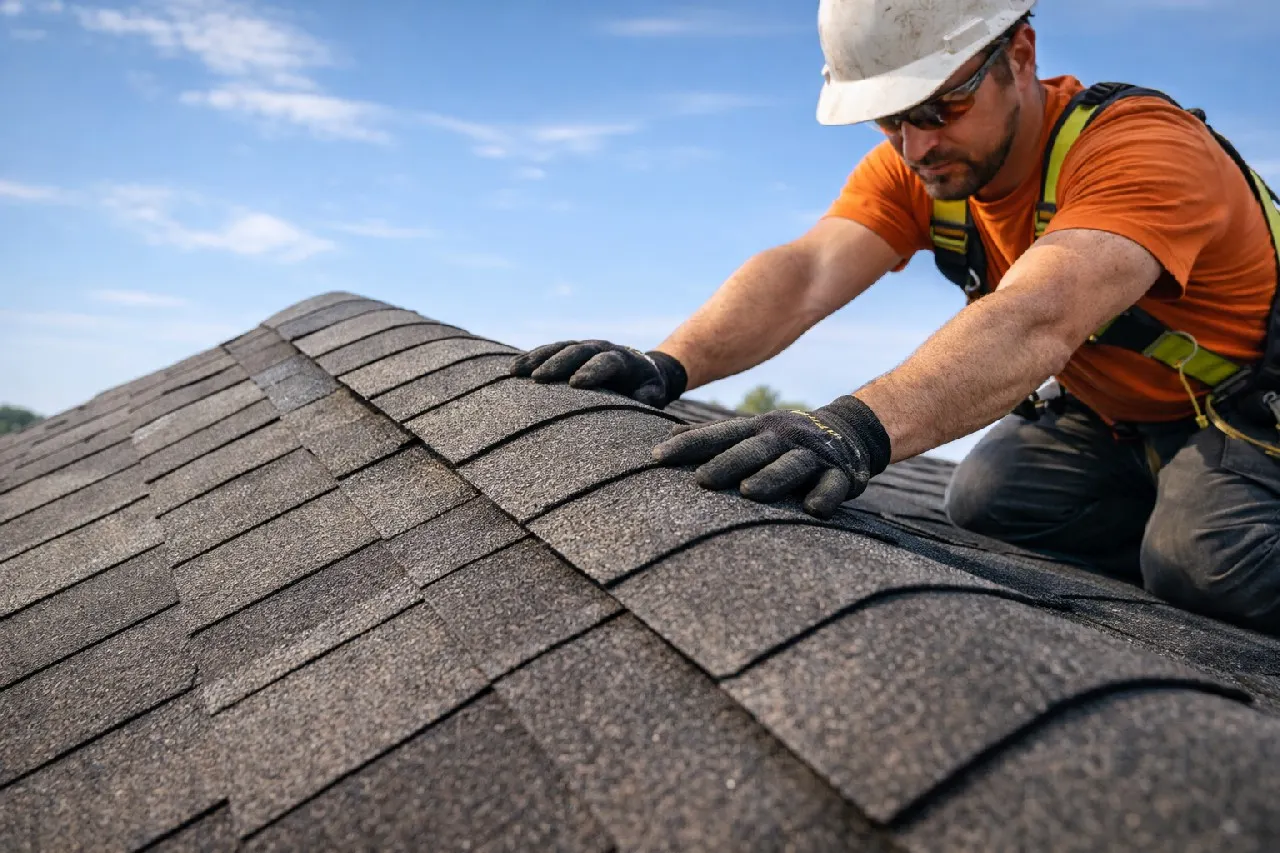
1. Inspect Your Shingles for Signs of Kansas City Storm Damage
Kansas City weather is unpredictable, and your roof is the first line of defense against our frequent hail and wind gusts. You don't need to climb up there to spot trouble, but you do need a pair of binoculars and a keen eye. Start by looking for anything that looks out of place from the ground level.
Missing, curled, or cracked shingles are immediate red flags that demand your attention. Even if a shingle isn't missing, look for these specific warning signs of storm-related distress:
- Granules accumulating in your gutters, which indicates the protective coating is wearing off.
- Bruised or dented shingles that suggest hail impact, even if the material hasn't punctured.
- Bald spots on the roof surface where the underlying fiberglass mat is exposed to direct sunlight.
- Curled edges that allow wind to catch and lift the shingle, breaking the seal.
If you see these signs, you are staring at a ticking time bomb. Water will eventually find those gaps, leading to rotting decking and ruined insulation inside your home. Catching these small blemishes early is the difference between a simple patch job and an expensive total replacement.
2. Clear Your Gutters and Downspouts to Prevent Foundation Water Backflow
Your gutters are the unsung heroes of your home's exterior, but in Kansas City, they get clogged fast. When leaves, shingle grit, and sticks pile up, water has nowhere to go. It backs up under your shingles and creates a direct path for rot to invade your decking.
Even worse, a clogged gutter system forces water to spill over the sides directly against your foundation. This is a fast track to a cracked basement wall or a flooded crawl space. Don't wait for a heavy spring downpour to find out your drainage is blocked.
The "Clear-Flow" Checklist:
- Remove loose debris by hand or with a plastic scoop to avoid scratching the metal.
- Flush the system with a garden hose to check for leaks and ensure water is moving toward the downspout.
- Ensure downspout extensions are pushed at least four to six feet away from your foundation walls.
If you see water pooling around your home's perimeter during a storm, your gutters are likely failing you. Cleaning them out twice a year is a cheap insurance policy against thousands of dollars in foundation repairs. Keeping your roof dry starts with making sure the water actually leaves the building.

3. Trim Back Overhanging Branches to Minimize Physical Roof Abrasion
Think of your tree branches as sandpaper for your shingles. Every time a heavy Kansas City wind blows, those limbs rub against your roof, stripping away the protective mineral granules that keep your home waterproof.
Once those granules are gone, your shingles become vulnerable to UV damage and moisture absorption. It is a slow, silent destruction that turns a solid roof into a sieve.
Keep Your Roof Safe from Tree Damage
You need to maintain a clear gap between your roof and the surrounding canopy. Follow these simple rules to stop the rubbing before it starts:
- Keep all branches trimmed at least six to ten feet away from your roofline.
- Clear away any dead or rotting limbs that could snap during a localized thunderstorm.
- Watch for "sweepers" that touch the shingles when the wind kicks up.
If you have large oaks or maples hovering over your home, do not wait for a storm to do the trimming for you. A professional tree service is a small investment compared to the cost of replacing shingles ruined by constant friction.
4. Inspect Attic Ventilation to Combat Midwestern Temperature Fluctuations
Here is the brutal truth about Kansas City homes: your attic needs to breathe, or it will cook your roof from the inside out. When the summer heat pushes temperatures in your attic well over 130 degrees, that trapped air has nowhere to go but through your shingles.
This cycle of extreme heat followed by icy winter plunges is a recipe for structural disaster. Without proper airflow, moisture gets trapped, creating a sauna that rots your decking and causes your shingles to blister or crack prematurely.
You need to check if your roof vents are actually doing their job. Take a flashlight into the attic on a sunny day and look for these warning signs:
- Light shining through areas where there should be sealed insulation.
- Damp wood or signs of mold and mildew on the underside of the roof deck.
- Signs of frost accumulation on the rafters during cold snaps.
- Rusted or clogged exhaust vents that are blocked by debris or thick insulation.
If your soffit vents are choked with insulation, the air cannot enter the attic to push the hot, humid air out through your ridge vents. Fixing this simple airflow issue can literally add years to the life of your roof and lower your monthly cooling bills in one go.

5. How Proactive Maintenance Saved One Overland Park Home from a Full Roof Replacement
Consider the story of a homeowner in Overland Park who thought their roof was bulletproof. They noticed a small patch of moss and a few loose shingles during a weekend yard cleanup but figured it could wait until the following spring.
When our team arrived for a routine inspection, we discovered that moisture had already bypassed the shingle layer. The wood decking beneath was soft, and minor water intrusion was beginning to rot the rafters.
Instead of an expensive, full-scale replacement, we performed a targeted repair. We replaced the damaged decking and sealed the flashing points before the next round of heavy Kansas City rain.
The Cost of Waiting
This homeowner saved roughly $12,000 by acting on small red flags. Here is exactly what they gained by being proactive:
- Extended roof lifespan: They added years to their current system rather than tearing it off early.
- Prevented internal rot: They stopped mold from spreading into their attic insulation.
- Avoided emergency rates: By scheduling a fix, they dodged the premium costs of an emergency mid-storm repair.
The lesson here is simple: your roof communicates its needs long before the ceiling starts leaking. If you see signs of wear, catching them early is the difference between a simple patch job and a massive financial headache.
Knowing When to Hire a Professional Roofer vs. DIY Repairs
There is a fine line between being a handy homeowner and creating a massive safety hazard on your roof. While clearing debris from your gutters is a task most folks can manage with a sturdy ladder, climbing onto a steep pitch to inspect flashing or nail down loose shingles is a different game entirely.
If you lack the proper safety gear or experience working at height, stay on the ground. A minor DIY mistake can lead to a broken limb or, worse, a compromised roof deck that lets water seep into your insulation.
When to call in the pros
You should immediately bring in a licensed contractor if you spot any of the following issues:
- Missing shingles across a large section of your roof.
- Obvious water leaks or active staining on your ceiling.
- Granule loss so severe that the fiberglass mat is showing.
- Damaged chimney flashing or rubber boots around plumbing vents.
Think of professional inspections as cheap insurance. A trained eye can spot subtle signs of thermal cracking or wind-lift that you will almost certainly miss from the lawn.
When you hire a pro, you are paying for their experience and their liability insurance. If a professional makes a mistake, they fix it; if you make a mistake, you pay for it twice when you inevitably have to call someone to fix your repair.
7. Knowing When to Hire a Professional Roofer vs. DIY Repairs
You can handle basic preventative care on your own, but there is a thin line between a quick fix and a costly mistake. If you have a solid ladder and no fear of heights, clearing gutters is a safe weekend task.
However, once you start messing with shingles or flashing, things change. You should call in a pro for these specific situations:
- You spot missing, curled, or cracked shingles across a wide area.
- Water stains on your ceiling persist even after you clear your debris.
- You see granule buildup in your gutters, which indicates advanced shingle decay.
- The roof structure looks uneven or sagging.
Walking on your roof is dangerous if you lack the right safety gear and experience. One slip doesn't just hurt you; it often causes more damage to the roofing materials than the storm did.
For more deep-dive advice on keeping your home secure, check out our full guide on Roof Maintenance. Professional eyes catch the hidden cracks that cause rot, which saves you thousands in long-term structural repairs.
When in doubt, get an expert opinion. A free inspection is much cheaper than replacing a water-damaged ceiling or rotting rafters down the road.
People Also Ask
How often should I inspect my roof in Kansas City?
You should inspect your roof at least twice a year, ideally in the spring and autumn. Additionally, it is essential to perform a visual inspection after any severe Kansas City thunderstorm or high-wind event to identify potential damage early.What are the most common causes of roof damage in Kansas?
The primary causes of roof damage in the Midwest include heavy hail, high-velocity wind gusts, and extreme temperature fluctuations. These elements can lead to cracked shingles, granule loss, and thermal shock that weakens the roof structure over time.Can I safely clean my own gutters, or should I hire a pro?
If you are comfortable on a ladder and have the proper safety equipment, you can clean your gutters yourself. However, if your home is multi-story or the gutters are severely clogged, hiring a professional is recommended to avoid accidental falls and ensure the drainage system is fully cleared.How do overhanging tree branches damage a roof?
Branches scrape against your shingles during high winds, removing the protective granules that shield your roof from UV rays. Furthermore, branches provide easy access for pests and can drop debris that traps moisture against the roof surface, leading to rot.When is a roof repair no longer enough?
A professional assessment is needed when you notice widespread shingle curling, significant sagging, or consistent leaks inside your home. If your roof is more than 20 years old and showing these signs, a full replacement is often more cost-effective than ongoing spot repairs.Need Roofing Services?
We deliver durable roofing installations and repairs quickly to protect homes and businesses in Kansas City, KS and nearby areas (66101, 66102, 66103, 66104, 66105).
Get Roofing Quote