

⚡ TL;DR: This guide explains why professional Ice and Water Shield installation is a necessary step for Bellevue homeowners looking to prevent structural water damage during cold Pacific Northwest winters.
📋 What You’ll Learn
Protecting your Bellevue home against our region’s harsh winter freeze requires more than standard roofing. This guide explores the vital role of Ice and Water Shield in preventing costly water damage.
- Master the mechanics of ice damming by understanding how fluctuating Pacific Northwest temperatures create trapped moisture that eventually pushes water underneath your shingles and into your attic space.
- Identify optimal membrane placement zones to ensure your roof’s most vulnerable areas, including valleys and eaves, receive the waterproof barrier coverage necessary to withstand heavy winter storms.
- Compare membranes versus standard underlayment to see why traditional felt paper fails during a freeze and how self-adhering modified bitumen creates a permanent seal against moisture infiltration.
- Analyze the long-term financial advantages of proactive waterproofing, showing how a one-time strategic installation saves you thousands in potential interior drywall repairs and structural wood rot remediation.
📖 Reading time: 7 min
✍️ Author expertise: Master roofer with two decades of experience securing Bellevue homes against coastal storms.
You wake up after a freezing Bellevue night to the sound of a steady drip-drip-drip inside your attic. That dark stain spreading across your ceiling isn't just an eyesore, it is a direct result of winter weather winning the war against your shingles.
Most homeowners think their roof is bulletproof until the first major thaw reveals a massive failure in their defense system. The culprit is almost always ice damming, a brutal force that pushes water underneath your roofing materials and directly into your home.
Ice and Water Shield acts as your last line of defense, a specialized membrane designed to keep your property dry when the elements get aggressive. Let’s break down how this installation works and why it is the smartest investment you can make for your Bellevue home this season.

1. Understanding the Mechanics of Ice Damming in the Pacific Northwest
Here in Bellevue, we deal with a unique weather cocktail. It starts with heat escaping from your living spaces into your attic, warming the underside of your roof deck.
When the outside temperature sits near freezing, that heat melts the snow resting on your shingles. The water trickles down toward your eaves, which are typically much colder because they overhang the exterior walls.
Once that water hits the freezing eaves, it turns back into solid ice. This process creates a frozen wall that acts like a dam, trapping subsequent meltwater behind it.
Because that trapped water has nowhere to go, it begins to back up underneath your shingles. It eventually finds a path through your deck seams or nail penetrations, leading to the dreaded interior leaks that ruin drywall and insulation.
To identify if your home is a candidate for this disaster, watch for these classic warning signs during a cold snap:
- Icicles hanging heavily from your gutters or roof edges.
- Water stains appearing on your ceiling directly beneath the exterior wall lines.
- Damp or sagging insulation found during an attic inspection.
- Chunks of ice forming in your gutter system that prevent proper drainage.
Standard roofing materials are designed to shed water running down a slope, not water standing against a barrier. When an ice dam forms, gravity stops being your friend and starts working against your home’s structural integrity.
What Exactly is Ice and Water Shield and How Does it Work?
Think of Ice and Water Shield as a heavy-duty, self-adhesive rubberized asphalt sheet that lives right underneath your shingles. Unlike standard roof paper that just sheds moisture, this membrane acts like a giant, sticky gasket that seals tight around every single nail you drive into the roof deck.
When the sun hits the snow on your roof and turns it into water, that liquid has nowhere to go. Because the membrane is fully adhered to the wood sheathing, it creates a watertight seal that prevents water from backing up and leaking into your insulation.
Key Features of a High-Performance Membrane:
- It bonds aggressively to the roof deck to prevent lateral water migration.
- The rubberized composition allows it to self-heal when a nail penetrates it, effectively plugging the hole.
- It remains flexible even when Bellevue temperatures plummet, unlike cheaper materials that crack or become brittle.
Many homeowners assume their shingles are the primary barrier against the rain and snow. In truth, the shingles are just the top layer of a larger system, and the Ice and Water Shield is the hidden hero that stays active when the shingles get pushed to their limit.

Strategic Placement: Where the Membrane Must Be Installed for Maximum Protection
Installing an Ice and Water Shield isn't just about covering your roof; it is about knowing exactly where the water wants to sneak in. Most roofing failures occur at the most vulnerable geometric intersections of your home.
If you miss these high-risk areas, the membrane won't stop a single drop of water. We focus our installation on specific zones where ice dams are guaranteed to form when the Bellevue temperature dips.
Critical Installation Zones
- The Eaves: We extend the membrane at least 3 to 6 feet up from the edge of your roof to beat the backup of melted ice.
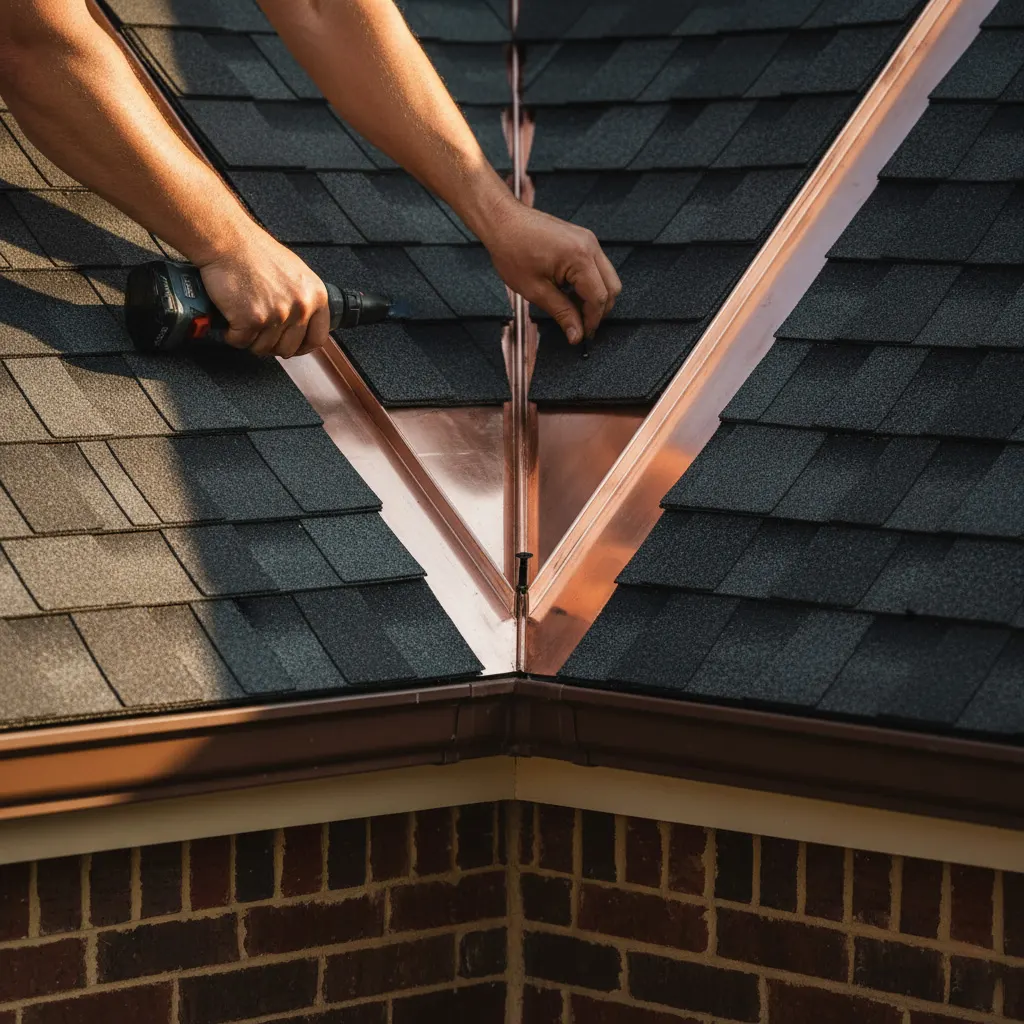
- Valleys: These are the natural drainage channels for your roof. A continuous strip here prevents water from scouring the deck during heavy rains.
- Roof-to-Wall Transitions: Wherever shingles meet a vertical wall, water likes to pool. A custom-flashed membrane creates a watertight seal that standard materials simply cannot match.
- Chimneys and Skylights: These structural penetrations are notorious entry points. We wrap the membrane around them to ensure a locked-tight perimeter.
Standard underlayment just sits there, but Ice and Water Shield self-seals around the nails used to attach your shingles. This creates a gasket effect that stops moisture dead in its tracks.
Think of it like armor for your decking. By covering these specific "hot spots" now, you prevent the expensive structural rot that ruins Bellevue homes from the inside out.
Why Standard Underlayment Fails When Bellevue Temperatures Drop
Think of standard felt paper as a basic raincoat. It works fine for a light drizzle, but when a heavy Pacific Northwest storm hits, it folds under pressure. This material is designed to act as a secondary water shedder, not a permanent waterproof barrier.
When the temperature swings between freezing and thawing, your roof deals with intense moisture buildup. Standard underlayment simply lacks the self-sealing properties needed to keep water out once nails penetrate the deck.
Once those tiny holes are exposed, the limitations of standard felt become dangerous. Here is why it consistently fails during our local winters:
- Felt paper is porous and absorbs moisture rather than repelling it.
- It is not adhesive, meaning it relies entirely on gravity and fasteners.
- Nail holes from your shingles stay open, creating easy pathways for melting ice to seep into your decking.
- The material becomes brittle in cold weather, leading to cracks that grow as your roof expands and contracts.
Standard underlayment is essentially a dust cover. It was never engineered to hold standing water. When ice dams force liquid to back up, that material becomes a saturated sponge pressed against your plywood.
By the time you notice a leak, the moisture has already compromised the structural integrity of your roof deck. Replacing a soggy, rotted roof deck costs thousands more than simply installing the right protective membrane from the start.
From Leaks to Integrity: A Case Study of a Bellevue Roof Restoration
Last winter, we helped a homeowner in the Bridle Trails neighborhood who thought their roof was solid until they found a puddle forming inside their master bedroom closet. The issue wasn't the quality of their architectural shingles; it was a total lack of Ice and Water Shield at the roof eaves.
Because the previous roofer skipped this crucial step, melting snow had nowhere to go. It backed up behind the shingles, seeped under the standard felt paper, and began rotting the wood sheathing from the inside out.
Here is what we discovered during the restoration process:
- The plywood decking had become soft and spongy, losing all structural load-bearing capacity.
- Mold colonies were starting to grow on the attic rafters due to trapped moisture.
- The original insulation was soaked, causing a massive spike in the homeowner's heating bills.
We tore off the damaged sections, replaced the compromised wood, and installed a high-performance self-adhering waterproof membrane along every vulnerable point. By creating a fully sealed gutter line, we turned their roof into a watertight system that doesn't care how long the snow sits on the shingles. The homeowner hasn't seen a single drop of water since, proving that proper underlayment is the difference between a minor winter annoyance and a five-figure repair bill.
The Long-Term Financial Benefits of Proactive Waterproofing
Most Bellevue homeowners look at the cost of high-end roofing components and see an expense. Smart property owners see insurance against catastrophic disaster.
Repairing water damage caused by ice dams is a nightmare that drains your bank account. You aren't just paying for a few shingles; you are paying for drywall repair, mold remediation, and ruined insulation.
Installing Ice and Water Shield during a roof replacement or repair is a classic low-cost, high-reward move. You pay a small premium once to avoid thousands of dollars in emergency restoration bills later.
Why Upfront Protection Saves Your Wallet
Think of it like an oil change for your car. Spending a little bit today prevents your engine from exploding on the highway tomorrow.
When you choose to include a professional-grade waterproofing membrane, you get a massive return on investment. Consider these financial realities of skipping the shield:
- Emergency Leak Repairs: Professionals charge a premium for "after-hours" calls during a winter storm.
- Structural Damage: Water rot creates soft spots in your roof deck, turning a simple fix into a total roof replacement.
- Property Value: A home with a documented, high-quality roofing system is significantly easier to sell when it comes time to move.
You work hard for your money. Don't let a frozen Seattle-area winter turn your biggest asset into a money pit. Proactive waterproofing is the ultimate way to lock in the value of your Bellevue property.
Final Words: Protecting Your Bellevue Investment Before the Next Freeze.
Waiting for the first leak to appear is a gamble that costs Bellevue homeowners thousands in avoidable repairs. When you choose professional Ice and Water Shield Installation, you are not just buying a product; you are buying peace of mind before the temperature plummets.
Your roof is the primary barrier between your family and the harsh Pacific Northwest winter. Taking action now prevents structural damage that shingles alone cannot stop.
Consider these critical steps to keep your home sealed tight:
- Inspect your attic insulation to ensure it is not allowing heat to escape through the roof deck.
- Check your soffit vents to maintain proper airflow, which prevents the rapid melting and refreezing cycle.
- Schedule a pre-winter inspection with a local professional who knows the specific moisture patterns of our region.
Do not wait until you see water dripping from your ceiling light fixture to think about your roof health. Proactive waterproofing is the difference between a dry winter and a costly insurance claim that leaves you dealing with mold remediation.
Protecting your property is about smart preparation. Secure your home today so you can sleep soundly during the next big freeze, knowing your defense system is ready for whatever the sky throws at it.
People Also Ask
Is ice and water shield required by building codes in Bellevue, WA?
Yes, modern building codes in Washington typically require ice and water shield membranes on roof eaves to prevent water backup. This is a critical safety measure to protect homes from the specific moisture challenges common in the Pacific Northwest climate.How long does an ice and water shield membrane last on a roof?
High-quality self-adhering membranes are designed to last as long as the roofing shingles above them, typically 20 to 30 years. Because these membranes are sealed beneath the roof surface, they remain protected from UV rays and weathering, ensuring long-term performance.Can I install ice and water shield over old underlayment?
It is not recommended to install new membrane over existing underlayment because it prevents a proper bond with the roof deck. For maximum waterproofing efficiency, the old materials should be removed so the adhesive membrane can seal directly to the wood sheathing.Does ice and water shield prevent all roof leaks?
While ice and water shield is the best defense against ice dams and wind-driven rain at vulnerable areas, it is not a substitute for proper shingle installation. It acts as a secondary water barrier that provides essential protection when primary roofing materials are compromised by severe weather.Why is ice and water shield necessary in Bellevue even if it rarely snows?
Even without heavy snowfall, Bellevue experiences significant cold snaps and high moisture levels that lead to ice damming and condensation. This membrane acts as a waterproof seal that prevents water from migrating under your shingles during freezing cycles or heavy rain storms.Need Roofing Services?
We install and repair roofs across Bellevue and nearby areas (98004, 98005, 98006, 98007, 98008) to deliver lasting protection through efficient project timelines.
Get Roofing Quote