

⚡ TL;DR: This guide explores essential techniques for professional metal roof installation in Coral Springs, focusing on hurricane-resistant fastening, corrosion protection, and precise weatherproofing to ensure long-term residential structural integrity.
📋 What You’ll Learn
Installing a metal roof in Coral Springs requires specific techniques to withstand intense South Florida weather. This guide breaks down the essential professional standards needed to ensure your home remains protected.
- Master high-velocity wind protection by understanding the critical science behind fastening patterns that prevent uplift during severe tropical storms, ensuring your panels stay secure during hurricane season.
- Select superior coastal-grade materials by identifying the ideal metal gauges and advanced protective coatings designed to resist the relentless saltwater corrosion and intense humidity found throughout Broward County.
- Install a impenetrable underlayment system that acts as a vital secondary moisture barrier, preventing structural rot and leaks during the heavy downpours common in our unique Florida climate.
- Execute precise flashing techniques to effectively seal complex roof geometries, eliminating common water entry points around vents, chimneys, and valleys that often plague substandard local roofing installations.
- Identify common installation errors by learning exactly what to look for during your contractor’s site visit to ensure your investment is built to meet strict local building codes.
📖 Reading time: 7 min
✍️ Author expertise: Licensed Coral Springs roofing contractor with decades of experience installing durable metal systems.
Hurricane season in South Florida doesn't care about your home insurance policy or your peace of mind. Every year, thousands of Coral Springs homeowners watch their shingle roofs get shredded by high winds, leaving them with massive repair bills and water damage that destroys their interiors.
You have a choice: keep patching up a failing system or switch to a solution that actually stands up to the brutality of our climate. Metal roofing isn't just an upgrade; it is a fortress for your family.
Most contractors will rush your install and leave you with hidden weak points that fail when the next big storm hits. If you want to stop gambling with your property, here are the specific installation secrets that turn a standard metal roof into an impenetrable shield for your Coral Springs home.

1. The Science of Wind Uplift: Why Coral Springs Homes Require High-Velocity Fastening
Most roofing contractors treat metal panels like simple siding. They slap a few screws in and call it a day, ignoring the physics that actually tears a roof off during a hurricane.
When wind screams over your Coral Springs roof, it creates negative pressure. Think of it like a giant vacuum cleaner pulling upward on your metal panels, trying to rip them right off the deck.
If your installer isn't accounting for wind uplift zones, your metal roof is just a glorified sail waiting for the next gust. Here is the reality of what keeps a roof attached when the wind hits 130 mph:
- Pattern Density: Standard spacing won't cut it. Your panels need specialized fastener patterns that distribute stress across the entire structural deck.
- Screw Length and Gauge: We don't use generic hardware store screws. We use high-tensile steel fasteners that bite deep into the trusses.
- Washer Integrity: A metal roof is only as strong as its weakest gasket. If those washers aren't UV-rated and high-compression, they will dry rot, crack, and let the wind peel your panels away.
You cannot compromise on the fastening system. High-velocity fastening is the difference between a roof that stays put and a pile of debris in your neighbor's yard.
Ask your contractor specifically about their fastener pull-out resistance testing. If they look confused, they aren't the right team for a Florida home.
Beyond the Panel: Selecting the Right Gauge and Coating for Coastal Corrosive Protection
Living in Coral Springs means your roof is constantly fighting a war against salt air and intense humidity. A thin, cheap metal panel is a death sentence for your home because the ocean air will eat through low-grade steel before you even pay off your mortgage.
You need to insist on a heavy-duty gauge that can handle the elements without warping or thinning. Here is why your choice of material dictates how long that roof actually stays on your house:
- 24-Gauge Steel: This is the gold standard for structural integrity. It resists denting from falling palm fronds and stands firm against high-pressure wind gusts.
- Aluminum Alternatives: If you live within a few miles of the coast, aluminum is often better. It doesn't rust, making it naturally immune to salt corrosion.
- Fluoropolymer Coatings: You aren't just buying metal; you are buying the chemical barrier on top of it. Ensure your panels feature a high-end Kynar 500 or Hylar 5000 finish to reflect UV rays and prevent surface oxidation.
Don't fall for the builder-grade shortcuts where contractors use thin, 26-gauge panels to save a few bucks. That thinner metal creates a flimsy roof that oil-cans, snaps, and leaves your deck vulnerable to the next tropical depression.
Your goal is corrosion resistance. Always check the manufacturer warranty for salt-spray ratings specifically tested for Florida climates. If the contractor can’t show you the spec sheet for the coating, walk away immediately.

3. Precision Underlayment: The Invisible Barrier Against South Florida’s Tropical Rain
Think of the metal panels as your roof's armor, but the underlayment is the second line of defense that actually keeps you dry. When wind-driven rain slams against your home, it can force moisture through the seams of even the most expensive metal panels.
Most bargain-bin contractors use cheap, felt-based paper that turns into a soggy mess the moment it gets wet. In the humid, scorching heat of Coral Springs, that standard felt will dry out, crack, and lose its grip before your roof is even five years old.
You need a high-temperature synthetic self-adhering membrane that sticks to the roof deck like a magnet. This creates a waterproof seal around every single nail and screw penetration, which is exactly where most leaks start.
Why Synthetic is Non-Negotiable
- It resists tearing even under heavy foot traffic during the install process.
- The material is designed to handle the extreme thermal expansion metal experiences under the Florida sun.
- It acts as an extra layer of protection if a metal panel is ever damaged or loosened during a storm.
Don't let a contractor cut corners here just to pad their profit margin. If they suggest using basic felt or a thin underlayment, show them the door because they are setting your home up for a future of interior water stains and mold growth.
Proper Flashing Techniques: Eliminating Leak Pathways in Complex Roof Geometries
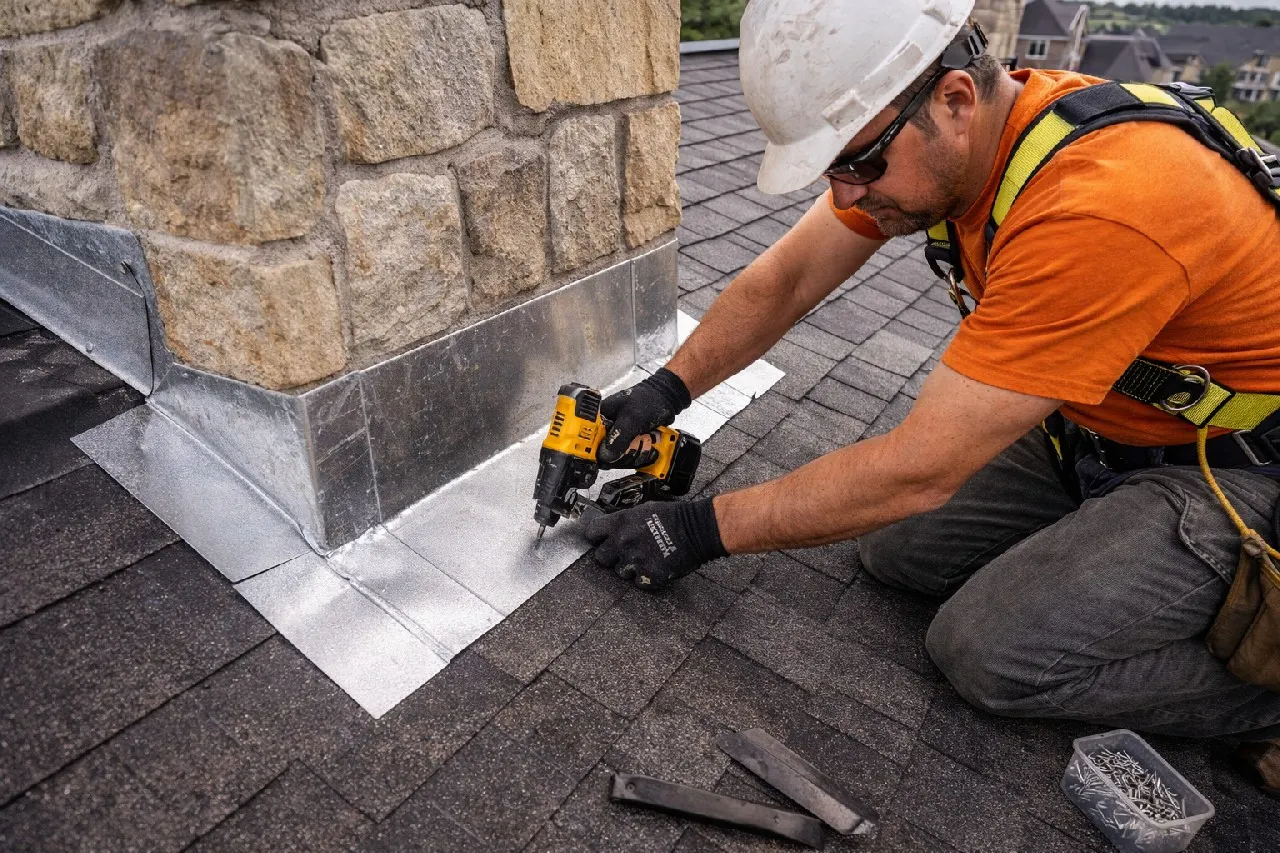
Most leaks don't happen in the middle of a metal panel. They happen at the junctions where your roof meets a wall, a chimney, or a skylight. In Coral Springs, where horizontal rain is the norm during a storm, standard flashing isn't enough.
If your contractor is just slapping some sealant over a gap and calling it a day, they are setting you up for failure. You need mechanical integration, not just a temporary patch of caulk. We use a three-step method to lock these transitions down:
- Counter-flashing: A secondary layer of metal that overlaps the primary flashing to ensure water is directed away from the seam, not into it.
- Hemmed Edges: We fold the metal edges to create a rigid, wind-resistant seal that prevents water from being blown upward into the attic.
- High-Temperature Sealants: We exclusively use industrial-grade, UV-resistant compounds that stay flexible under the blistering Florida sun.
Complex geometries like hip roofs and dormers demand surgical precision. If the flashing isn't properly tucked behind your exterior cladding or stucco, the water will find a way inside. We insist on custom-bending our flashing on-site to match the exact pitch of your home, ensuring a seamless fit that never relies on weak adhesives to keep your interior dry.
5. Fortifying Your Investment: A Case Study in Coral Springs Metal Roof Resilience
Consider a recent project we handled near the Sawgrass Expressway. A homeowner had seen three shingle roofs destroyed in a decade, each time suffering from expensive water intrusion that ruined their drywall and flooring.
We replaced that failing system with a 24-gauge standing seam metal roof. We didn't just slap it on; we utilized a continuous interlocking system that anchors directly into the structural trusses.
When the next tropical storm hit, the difference was night and day. While neighbors were picking up asphalt shingles from their lawns, this home remained completely untouched.
The Measurable Difference
The results of proper installation are not just anecdotal. By switching to a high-performance metal system, this homeowner achieved several immediate benefits:
- Zero debris damage despite wind gusts exceeding 100 mph.
- A significant reduction in their monthly energy bill due to advanced reflective pigment technology.
- Complete elimination of the annual repair cycle that had drained their savings account for years.
This is the definition of a fortress mentality. When you prioritize the science of the install over the lowest bid, your roof transitions from a liability into your most valuable physical asset.
Common Installation Pitfalls to Watch for During Your Contractor’s Site Visit
Most roofing disasters are born on the ground before a single panel hits the deck. When your contractor arrives, pay close attention to how they handle the details that separate a quick buck from a lifetime roof.
Watch for these red flags that indicate a shortcut is being taken:
- Over-torquing fasteners: If you see a drill operator crushing the rubber gaskets on the screws, stop them. A squashed gasket won't seal; it will crack and invite water inside.
- Using incompatible metals: Mixing dissimilar metals causes galvanic corrosion. That fancy aluminum roof will literally eat itself if it is fastened with the wrong steel screws.
- Skipping the hemmed edges: Metal panels should be hemmed at the eaves to prevent wind from catching the edge. If the metal looks like a raw, flat cut, the next gale will peel it back like a sardine can.
Another critical error involves the treatment of cuts and punctures. Every time a contractor shears a piece of metal to fit a valley or hip, they expose raw steel edges that will rust in our humid salt air.
If you don't see them applying a high-grade cold-galvanizing compound or proper touch-up paint to those raw edges, they are setting you up for premature roof failure. Don't be polite about this. If the exposed metal isn't sealed immediately, it isn't an installation—it's a liability.
Final Words
At the end of the day, your roof is the only thing standing between your expensive interior and a chaotic Florida storm. Most homeowners settle for average work, but you now have the insider knowledge to demand excellence during your Metal Roof Installation.
Do not let a contractor cut corners with thin gauges or cheap fasteners just to save a few bucks. If they cannot explain their wind uplift mitigation strategy or how they handle flashing at complex roof hips, find someone else immediately.
Take this checklist with you when interviewing teams for the project:
- Confirm the exact wind rating of the specific panels being used.
- Ask to see their process for sealing valley joints and pipe boots.
- Verify the underlayment material is rated for high-heat, high-moisture South Florida environments.
- Demand a documented inspection of the fastening pattern before the roof is closed up.
Your home is likely your biggest asset, so treat the installation process like a high-stakes engineering project. When you get the technical details right, you stop worrying about the weather forecast entirely.
That is the difference between a roof that just looks nice and a roof that actually protects your family. Invest in precision today, or prepare to pay the price when the wind starts howling later.
People Also Ask
Is a metal roof worth it for a home in Coral Springs?
Yes, metal roofs are an excellent investment for Coral Springs homes due to their superior wind resistance and longevity. They offer significant protection against tropical storms and can help lower your homeowners insurance premiums in Florida.What gauge of metal is best for Florida coastal homes?
We recommend using a 24-gauge or 26-gauge steel panel for residential installations in South Florida. This thickness provides the ideal balance between structural integrity against hurricane-force winds and necessary durability against salt-air corrosion.How do you prevent leaks in complex roof designs?
Leak prevention starts with proper flashing techniques around valleys, chimneys, and roof-to-wall transitions. Using high-quality synthetic underlayment combined with heat-welded or professional-grade sealants ensures that water is diverted away from vulnerable joints.Do metal roofs handle South Florida rain better than shingles?
Metal roofs are far superior to shingle roofs when managing heavy tropical rain because they feature interlocking panels that shed water instantly. When installed with high-performance underlayment, they create a watertight seal that prevents moisture intrusion during intense Florida downpours.How long does a metal roof installation typically take?
A professional metal roof installation in Coral Springs usually takes between 3 to 7 days, depending on the size and complexity of your roof. Factors like the pitch of the roof and the amount of custom flashing required will dictate the final timeline.Need Roofing Services?
We provide fast roof repairs and replacements in Coral Springs and nearby areas (33065, 33067, 33071, 33076) to restore protection and strengthen homes against weather.
Get Roofing Quote